Big projects are changing familiar blocks along Oak Lawn Avenue, Maple Avenue and Lemmon Avenue. The useful story is not that the sky is falling. It is what is actually planned, what is already changing, and what neighbors should watch next.
I have known this neighborhood for more than 60 years. Construction is hardly a new acquaintance. But lately, the scale of what I am seeing feels different.
It is not just a house coming down or another building getting a facelift. It is substantial pieces of familiar blocks being reconsidered at once. A commercial corner becomes the site of a proposed tower. An office campus expands across another block. A stretch of Lemmon Avenue is planned for hundreds of apartments and a restaurant.
Drive past enough of those places in a week, and it is reasonable to ask: What is happening here?
It is also reasonable to resist the easy headline. A collection of cranes does not prove that everyone is thriving. A demolished building does not prove that a neighborhood is being ruined. And my impression that this feels bigger than earlier construction cycles is not a substitute for a historical count of permits, units or investment.
What we can do is look at the projects, separate their stages, and consider the changes they could bring to everyday life.
Three projects give the conversation some substance
2615 Oak Lawn Avenue: a proposed tower, not a completed deal
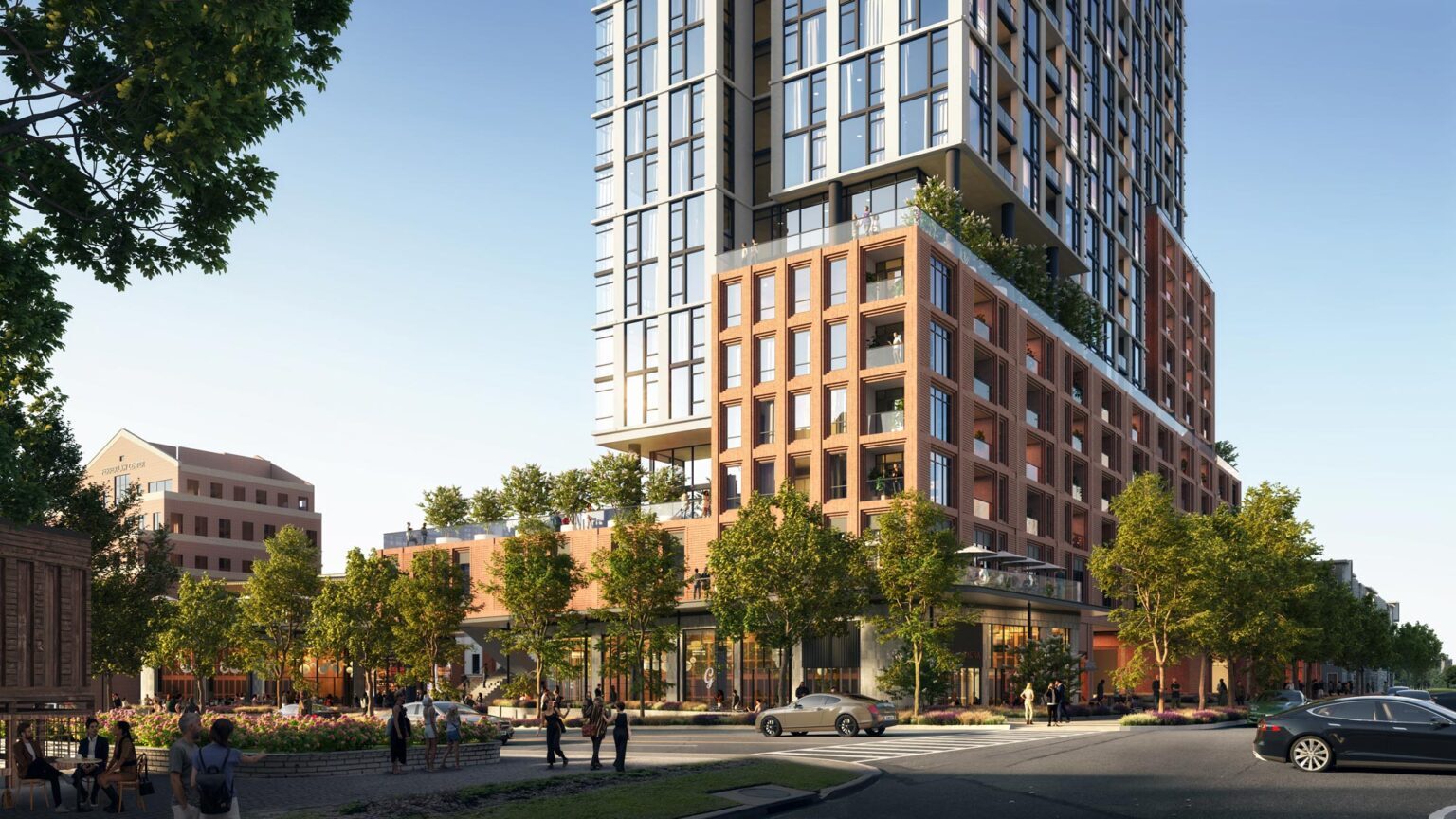
The redevelopment we previously covered at 2615 Oak Lawn Avenue is a proposed 24-story mixed-use tower on approximately 1.93 acres.
Architect GFF Design describes a plan led by the Halperin family that would replace an existing strip center with residential space, restaurants, terraces and landscaping. Our September reporting documented the May 13, 2026, zoning approval, including a maximum height of 275 feet.
The distinction is important. Zoning approval establishes what may be built under specified conditions. It does not establish that construction has begun, that financing is complete, or that every pictured detail will appear. No verified construction start date was established in the material reviewed for this article.
For neighbors, the proposal raises a practical question: If a much larger building arrives at this corner, will the sidewalks, entrances and street-level businesses make the block more useful as well as more valuable?
Read our reporting on 2615 Oak Lawn Avenue · View GFF Design’s project description and renderings
Old Parkland: another block, with a different purpose
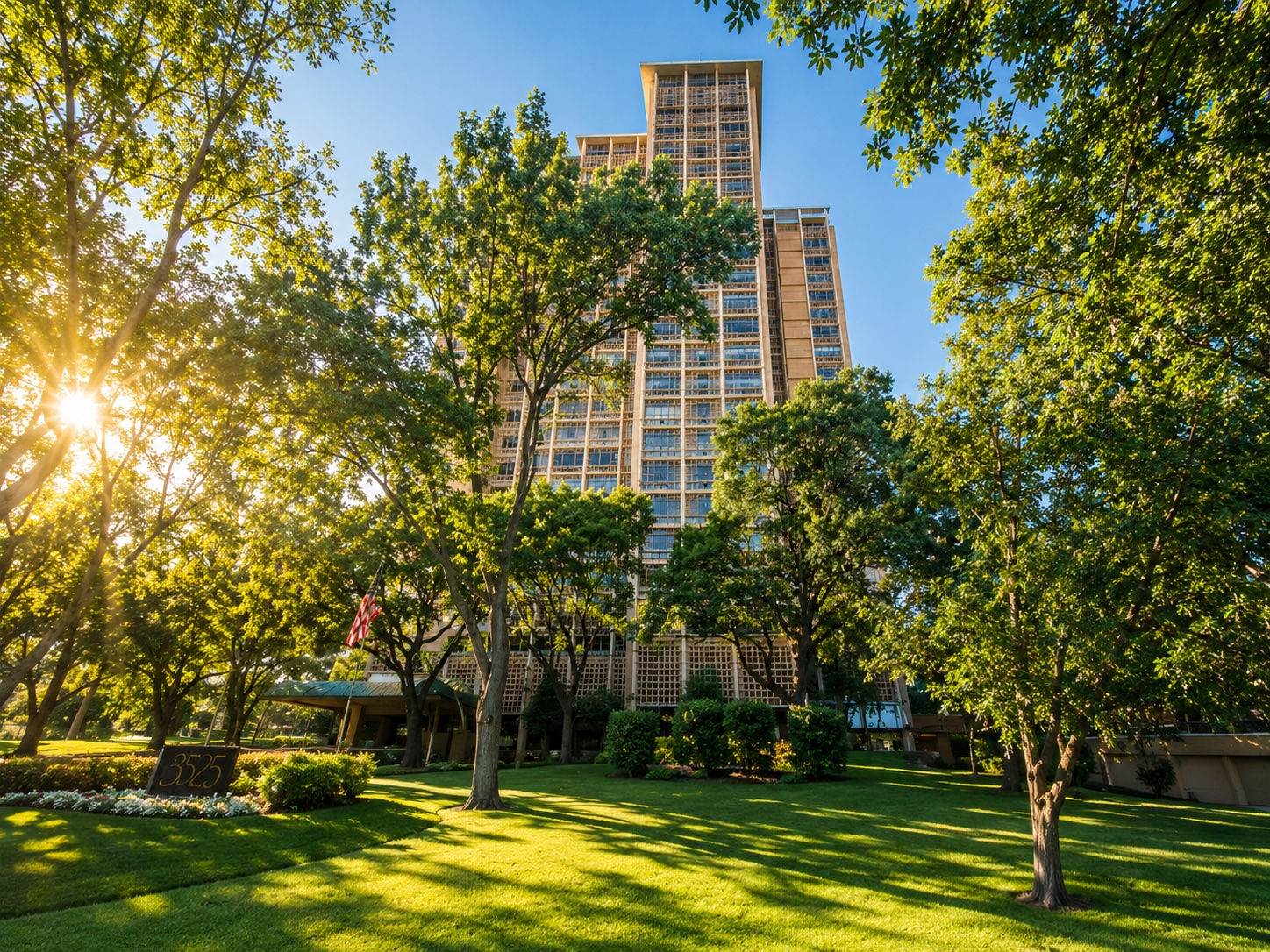
Along Maple Avenue, Old Parkland’s next expansion is a different kind of investment. This is an office-campus story, not another apartment tower.
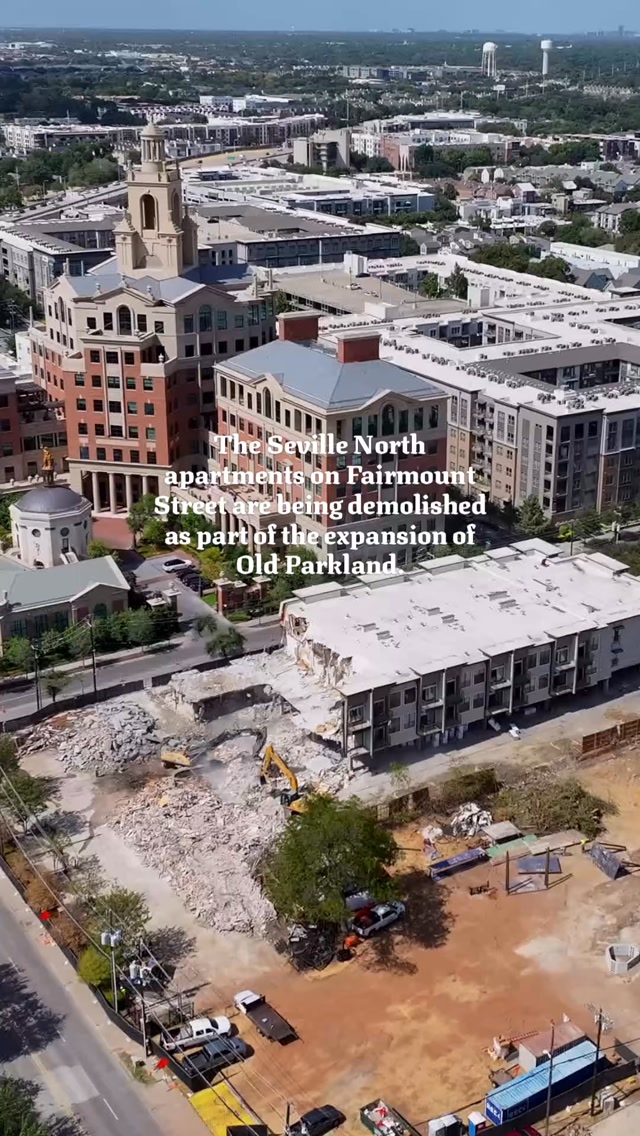
Our September 19 report documented demolition at the Seville North apartments on the block bounded by Maple Avenue, Shelby Avenue, Fairmount Street and Reagan Street. City materials identify zoning case Z-26-000097 for that block. The associated replat covered approximately 2.42 acres.
That gives this project a visibly different status from a rendering alone: site clearing was already documented. It does not mean that every replacement building is under vertical construction or that an opening date is guaranteed.
Crow Holdings describes the established Old Parkland campus as home to businesses, foundations and family offices. That is a specialized business community, distinct from the apartments and restaurant spaces planned elsewhere in the neighborhood.
The neighborhood questions are straightforward: How will the next phase meet Maple Avenue? What happens to crossings, landscaping and construction access? And what will the change mean beyond the campus boundaries?
Read our reporting on the Old Parkland expansion
3900 Lemmon Avenue: substantial even without a skyscraper
The large mixed-use project at 3900 Lemmon Avenue illustrates why footprint matters as much as height. City planning drawings describe a mid-rise residential and retail/restaurant development, rather than a high-rise.
A Texas Department of Licensing and Regulation filing for Trademark 3900 Lemmon lists 406 rental apartments, structured parking, future restaurant shell space and shared amenities. It names Trademark Property Company as owner and GFF Design as the design firm, with an estimated project cost of $100 million.
Those are filed project details, not a certificate that the building is finished. The filing’s construction dates are schedule information submitted with the registration and should not be treated as independently verified progress or a promised opening.
Even without a slender tower, hundreds of homes and a substantial building frontage can change how a corridor functions. What matters is not simply how many apartments fit on the land, but how people will enter, walk, cross the street and use what is at ground level.
See the state project filing for 3900 Lemmon Avenue
Why construction can feel disconnected from the economy at home
There is an understandable disconnect between seeing enormous projects and managing an ordinary household budget. But a developer’s investment decision and a resident’s monthly finances answer different questions.
A major project is a bet on future demand, often made through years of land assembly, design, approvals and financing. Its appearance today does not necessarily mean that the decision was made today, or that conditions are equally favorable for every buyer, renter or business.
These projects demonstrate interest in particular sites and types of space. They do not, by themselves, establish that the national economy is booming for the wealthiest households, that the local resale market is strong, or that nearby owners are assured an increase in value.
That is not an argument against investment. It is an argument for asking more of the evidence than a photograph of a crane can tell us.
The smaller changes deserve attention, too
The large projects are easier to name. The smaller replacements can be easier to miss until a familiar building is suddenly gone.
I see that change on ordinary drives through the neighborhood: older structures disappearing and new residential framing taking their place. Those observations belong in the conversation, but unnamed sites should not be added to a development tally as though their addresses, approvals and unit counts have been verified.
A useful next step is a block-by-block inventory. What stood there? What is replacing it? How many homes are being removed and added? Is a business relocating or closing? Those answers would tell us far more than simply calling everything a boom.
Judge the change from the sidewalk
New housing can make room for more neighbors. New businesses can give us more reasons to stay close to home. Thoughtful architecture and landscaping can improve an ordinary daily walk.
There are also legitimate questions about the loss of existing homes and businesses, construction disruption, safe crossings and whether the new spaces serve more than their own occupants. Those are questions to investigate, not conclusions to assume.
For me, the test is simple: When the fences come down, is the neighborhood easier and more enjoyable to live in?
Can someone walk past the building comfortably? Is there shade? Are entrances welcoming? Does the ground floor offer something useful? Can a longtime resident still find familiar places and everyday services alongside the new arrivals?
We do not need to choose between celebrating every rendering and mourning every change. We can welcome investment and still expect it to contribute to the place around it.
Oak Lawn is giving us plenty to watch. The job now is to pay attention carefully enough that the story is about what is happening, not what we can make people fear.
What change are you noticing on your block? Tell us the location and what you are seeing. Specific addresses and questions can help guide the next round of reporting.
Reporting note: Prepared October 16, 2026. This article distinguishes project descriptions, zoning milestones, documented demolition and state registration information. It does not establish a historical record for construction activity or predict property values, rents or project completion dates. Additional sources: Dallas City Council’s August 25, 2026, agenda, item Z9; Crow Holdings’ Old Parkland campus history.