A small backyard does not need to impersonate a large one. It needs a reason to step outside: a beautiful place to sit, a little privacy, a view worth lingering over. The most inviting gardens make those priorities clear and let everything else support them.
Start with what you actually want to do out there. Morning coffee and a book call for a different arrangement than dinner with friends or an afternoon tending vegetables. These 11 approaches offer different ways to turn limited ground into a place with personality.
1. Give the center some breathing room
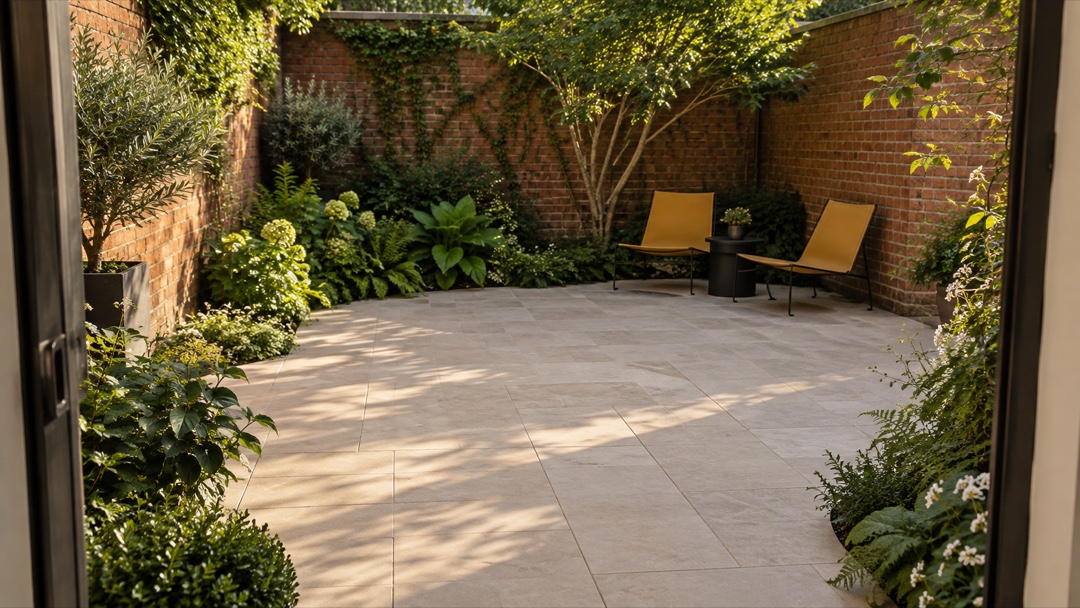
Resist furnishing every available square foot. A simple courtyard can feel generous when seating occupies one corner and planting frames an open middle. Let the surface itself contribute to the composition: pale stone, a handsome brick pattern or well-kept gravel can be as satisfying as another piece of furniture.
Make it work: Arrange your everyday seating first, then leave a comfortable route from the door. Before buying anything else, live with the open space for a week.
2. Make the kitchen garden part of the scenery
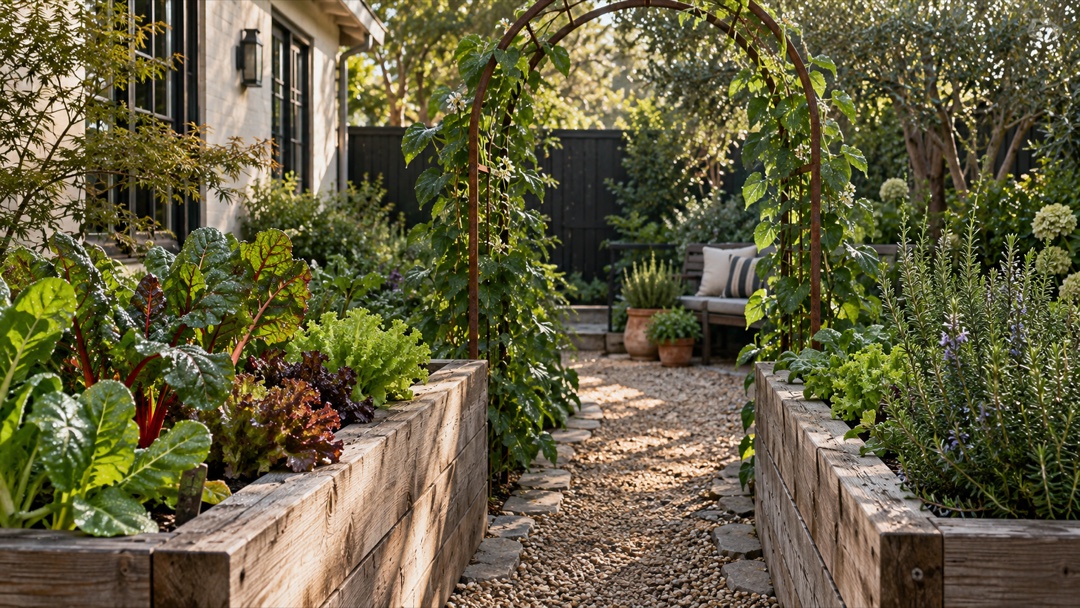
Vegetables do not have to disappear behind the decorative garden. Two neatly proportioned raised beds can create structure, while leafy crops supply texture and color. An arch gives climbing plants somewhere to go without taking another large bite out of the ground.
Make it work: Put beds where you can reach their centers without stepping into the soil. Choose crops for the light you have, and keep water access convenient.
3. Create more than one place to land
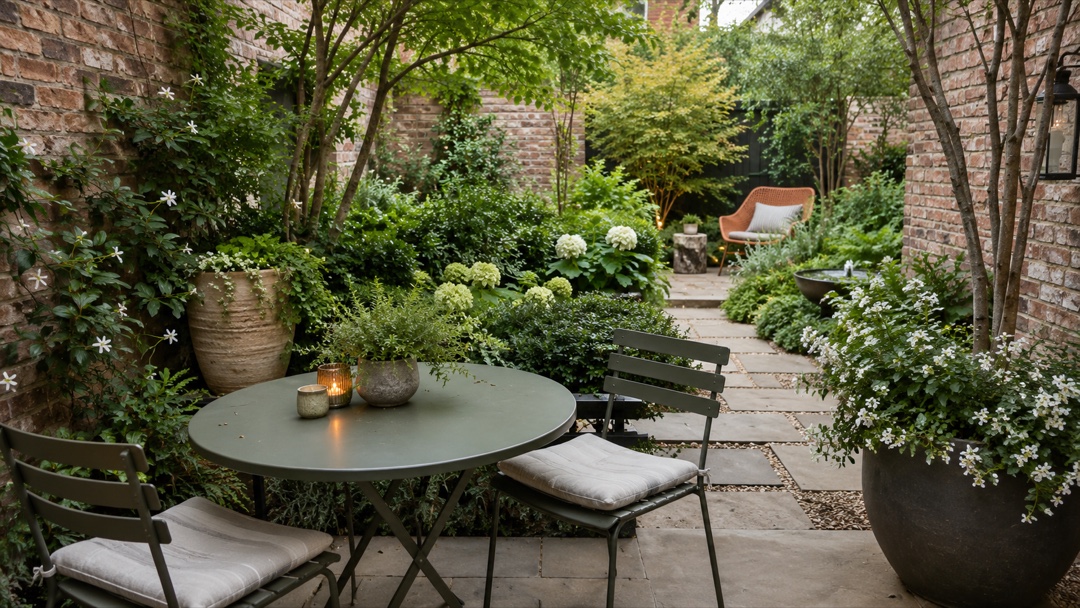
A single patio can reveal everything at once. A small sequence of spaces encourages you to explore: a table near the house, a planted pause, a quiet chair farther back. The divisions can be light. A change in paving or a few carefully placed shrubs may be enough.
Make it work: Give each destination a purpose. Two useful stopping points are better than three cramped ones.
4. Choose furniture that can change its mind
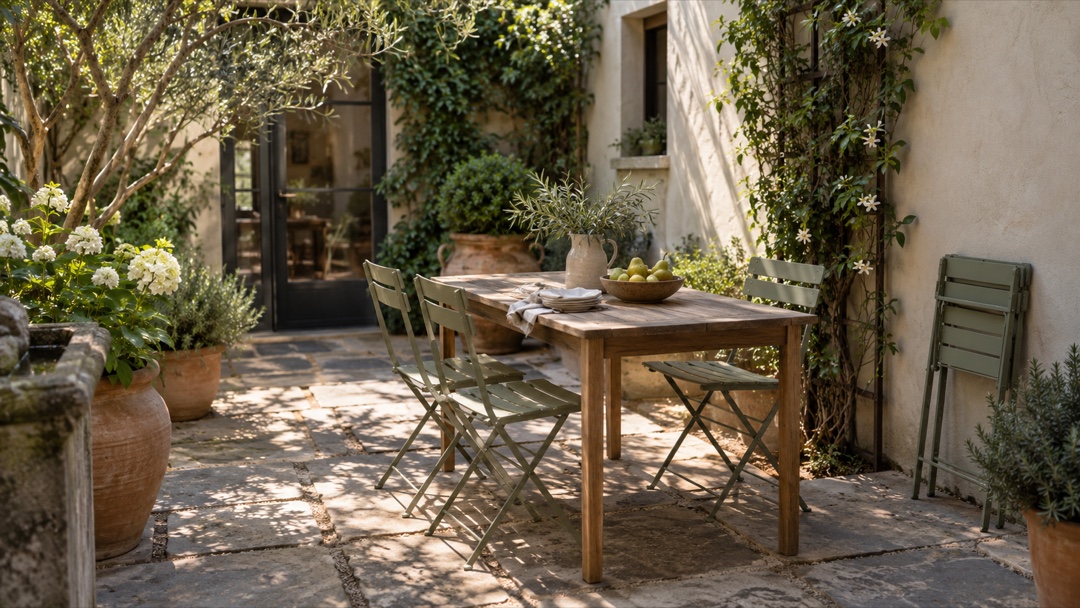
A compact garden works harder when its furniture moves easily. Folding chairs accommodate guests and disappear afterward. A small table can serve lunch today and hold a collection of pots tomorrow. Slender profiles leave more of the garden visible than bulky matching sets.
Make it work: Measure with chairs pulled out, not tucked in. Include the space people need to sit down and walk behind them.
5. Put the lushness at the edges
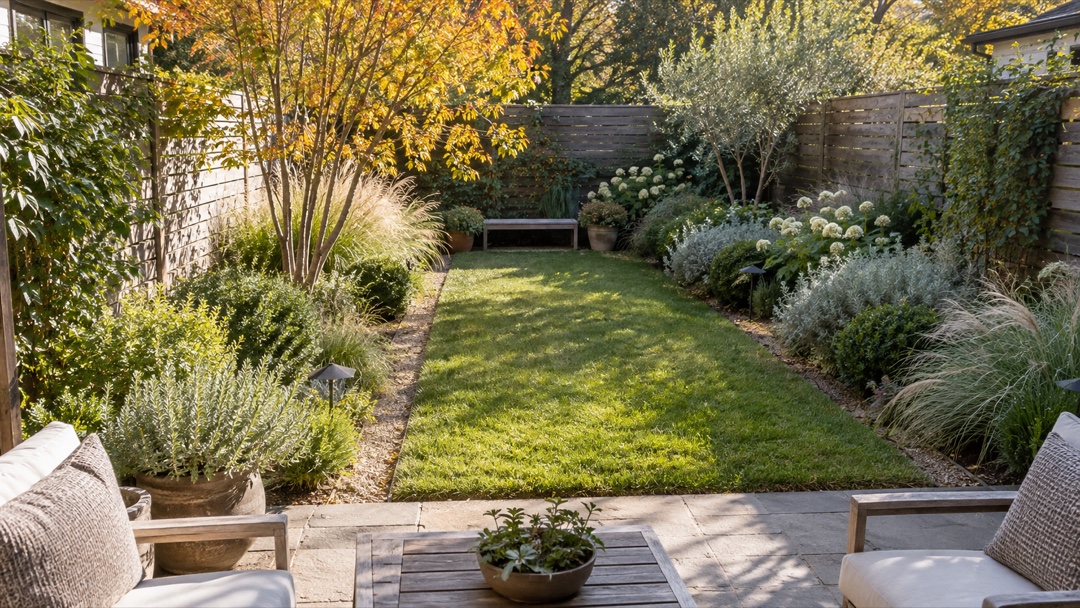
A layered perimeter can soften a fence without scattering planting beds across the yard. Combine low growth, fuller shrubs and a modest tree where space allows. Repeating a few forms brings rhythm; collecting one of everything usually brings clutter.
Make it work: Plan for mature size. Leave room for maintenance and keep planting from narrowing the usable center as it grows.
6. Let a leafy outlook extend the view
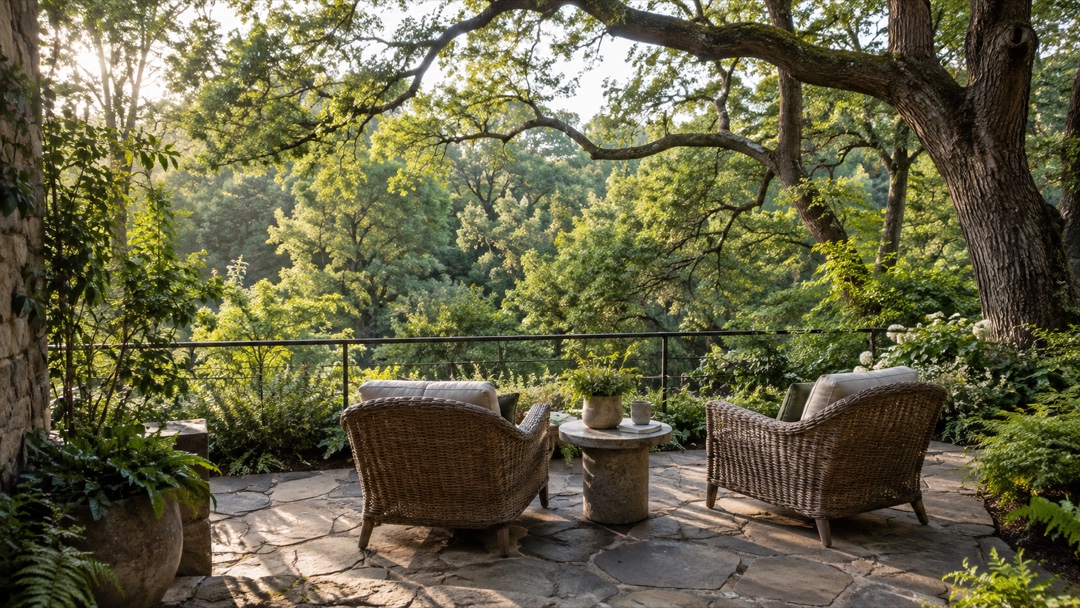
If your yard looks toward established trees, use that canopy as part of the composition. A visually open boundary and related planting can make a tiny terrace feel connected to a larger green setting. The effect comes from continuity, not from pretending the neighboring land belongs to you.
Make it work: Preserve privacy where you need it. Frame one appealing view instead of opening every side indiscriminately.
7. Give the narrow strip a playful job
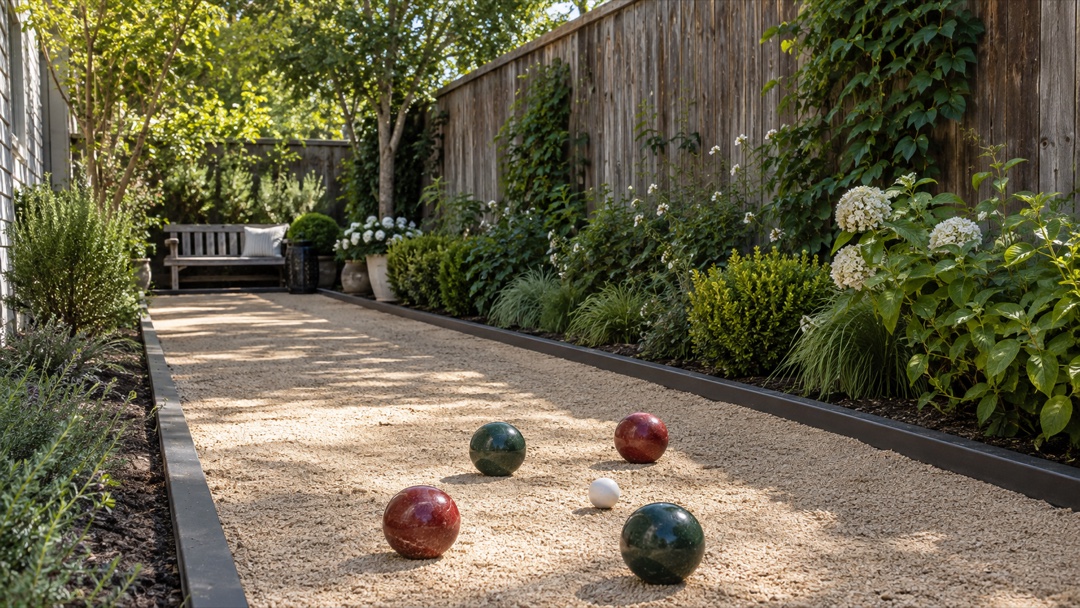
The side yard does not have to remain a passage with a few apologetic pots. A compact recreational bocce lane, a little putting area or another activity you genuinely enjoy can make a long, narrow space memorable. A bench at one end gives spectators a place in the action.
Make it work: Think casual play, not regulation dimensions. Keep essential access clear and choose a surface suited to drainage and the activity.
8. Grow upward without crowding the floor
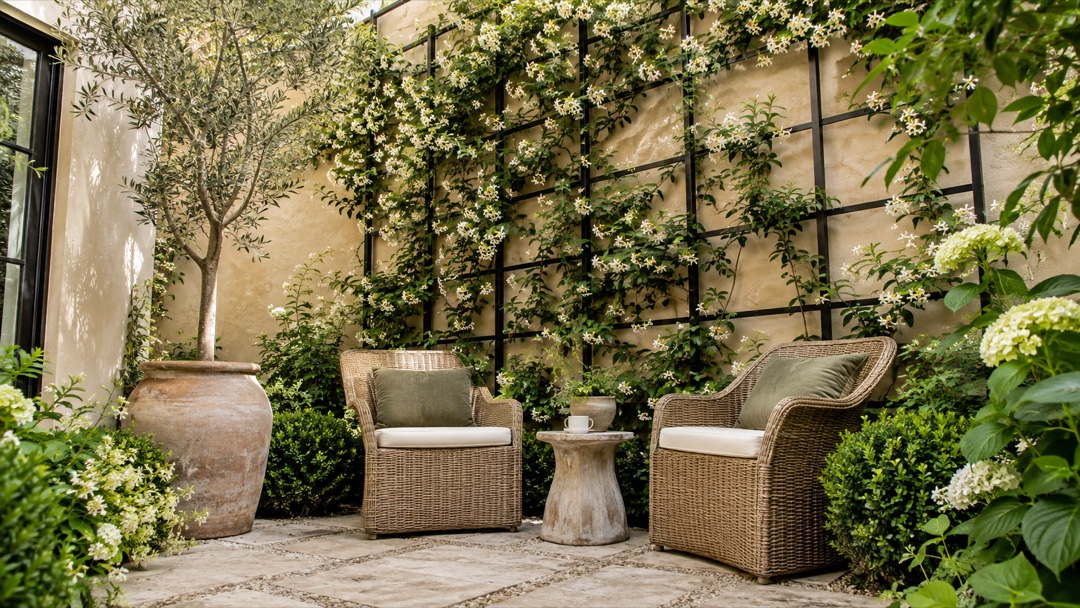
A trellis introduces height while leaving room below for a chair or a path. Climbers can turn an ordinary wall into a living backdrop, and a slender tree can provide a similar vertical accent. One well-placed upward gesture often does more than a row of oversized containers.
Make it work: Match the support to the plant’s eventual weight and growth habit. Allow access for pruning, and protect the wall or fence beneath it.
9. Bring the garden right up to the seat
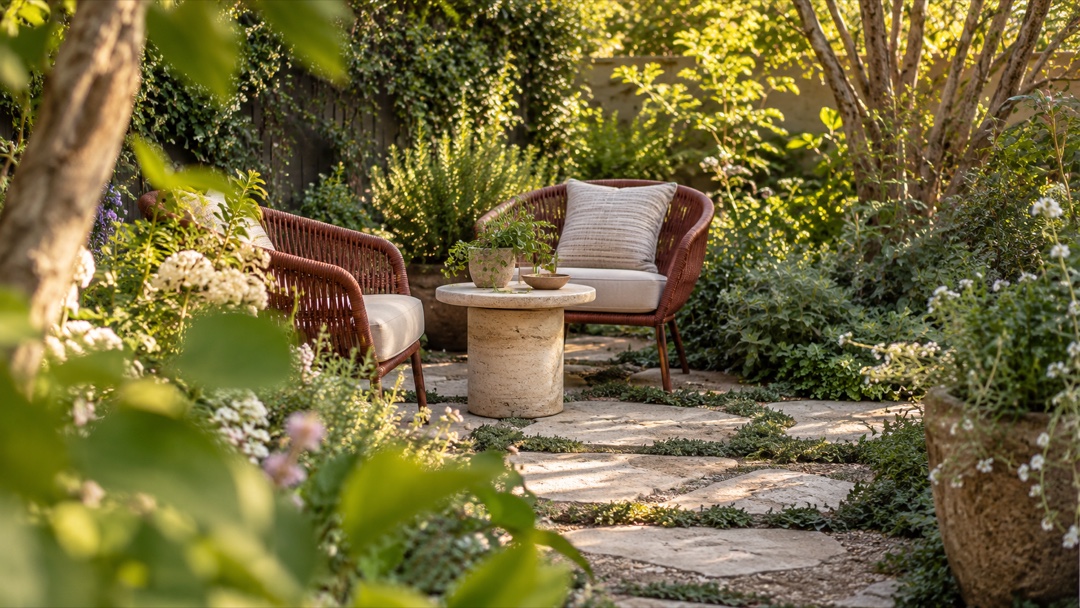
Hardscape feels less like a leftover slab when planting meets its edges naturally. Low foliage beside paving, a little growth between suitable joints and taller planting beyond the chairs can make a seating area feel immersed rather than isolated.
Make it work: Keep walking surfaces stable and clear. Save the generous spill of foliage for edges where it will not trip someone or obstruct furniture.
10. Save something for the second glance
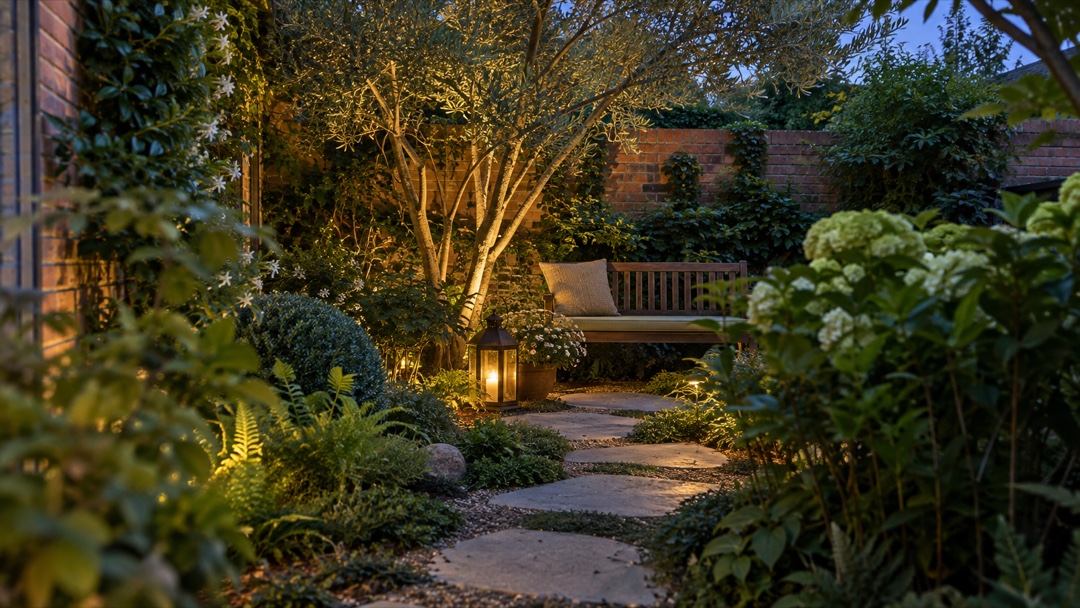
A bench partly screened by planting can give even a small garden a sense of discovery. A turning path slows the eye, while a glimpse of a cushion or a softly lit corner invites you farther in. Concealment works best when it promises a comfortable place to arrive.
Make it work: Leave enough space to reach the retreat easily. Use gentle, targeted lighting rather than flooding the entire garden after dark.
11. Commit to one memorable focal point
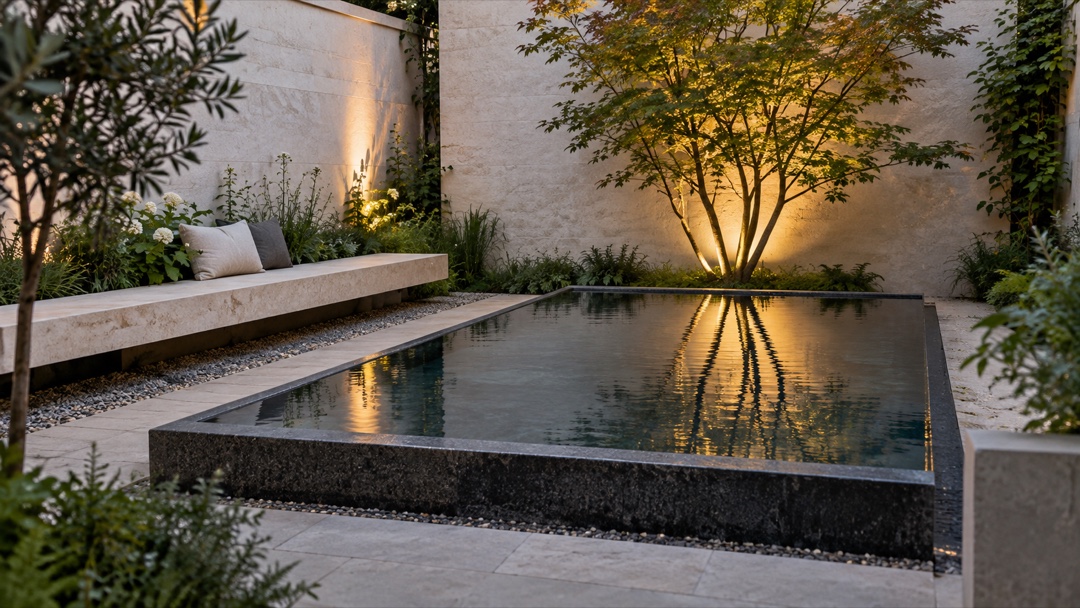
A shallow reflecting basin, a sculptural tree or an exceptional pot can anchor the whole yard. The surrounding materials should help it stand out rather than compete. Restraint is what turns an attractive object into the garden’s defining moment.
Make it work: Check the view from inside the house as well as from the patio. Consider upkeep and household safety before choosing a water feature.
Make the plan fit your life
Choose one or two of these ideas, not all 11. Check sunlight, drainage and access before investing in materials. Then put your budget where you will notice it every day: comfortable seating, a strong planting composition and an outdoor space that feels unmistakably yours.
Reading inspiration: Martha Stewart’s small-backyard layout feature. This article offers original planning guidance from The Dallas Registry. The accompanying AI-generated images are design illustrations, not photographs of documented properties.