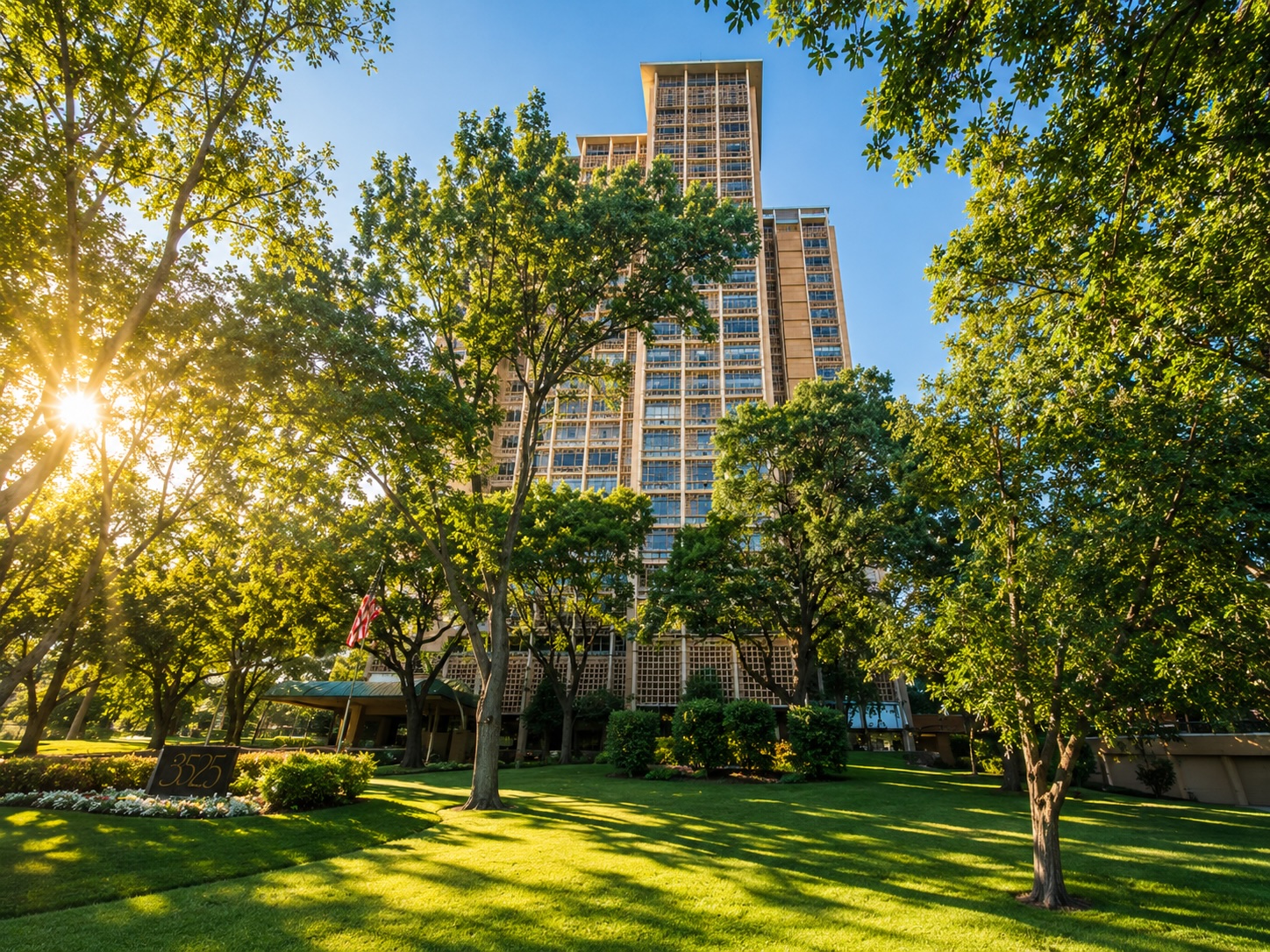
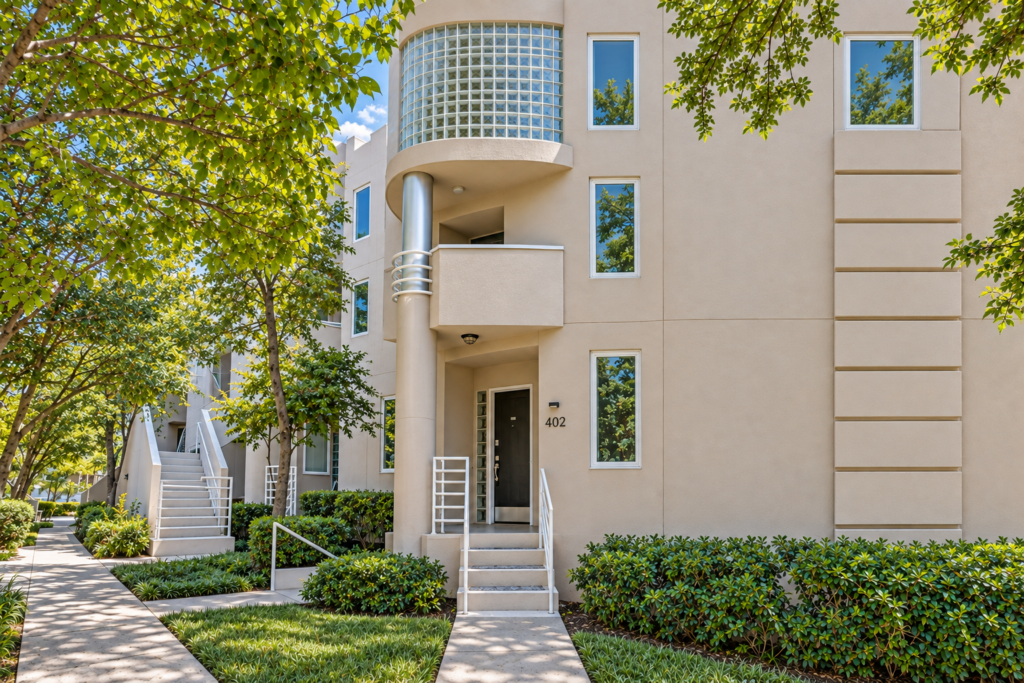
One turn onto Avondale Avenue and Dallas seems to trade its boots for white linen. At 4040 Avondale, a procession of pale stucco walls, geometric openings, rounded details and tropical-minded landscaping gives Oak Lawn an unexpected flash of South Beach. This is Avondale Gardens, a condominium community with enough architectural personality to make even a routine arrival feel like the beginning of a vacation.
The first surprise is how private it feels. Avondale Gardens occupies roughly 1.45 acres in one of central Dallas’s most connected neighborhoods, yet the community turns inward around courtyards, balconies and a swimming pool. Gated, assigned parking helps keep the practical side of city life out of sight, while private entries and layered floor plans give many residences the intimacy of townhomes rather than conventional apartments.
You can check out what is available for sale or lease at Avondale Gardens Condos by taping here.
Built at Oak Lawn’s turning point
Its 1985 construction date could hardly be more revealing. Dallas was deep in an in-town condominium boom, and Oak Lawn was confronting intense development pressure. The city’s Oak Lawn planning effort, developed through years of negotiation among residents, property owners, planners and architects, became law in 1985. Contemporary accounts describe a neighborhood trying to welcome urban growth without surrendering the residential pockets, irregular setbacks and human scale that made it desirable in the first place.
Avondale Gardens looks like a spirited answer to that moment. It provided urban density without becoming a glass tower. Instead, its designers used stucco, strong geometry, terraces, curved staircases, dramatic fireplaces and a composition that feels assembled room by room. The result is not textbook Miami Beach Art Deco, and no reliable record located for this story identifies an architect or formal stylistic designation. It is better understood as Art Deco-inspired Dallas modernism, filtered through the glamour and optimism of the mid-1980s.
A building that refuses repetition
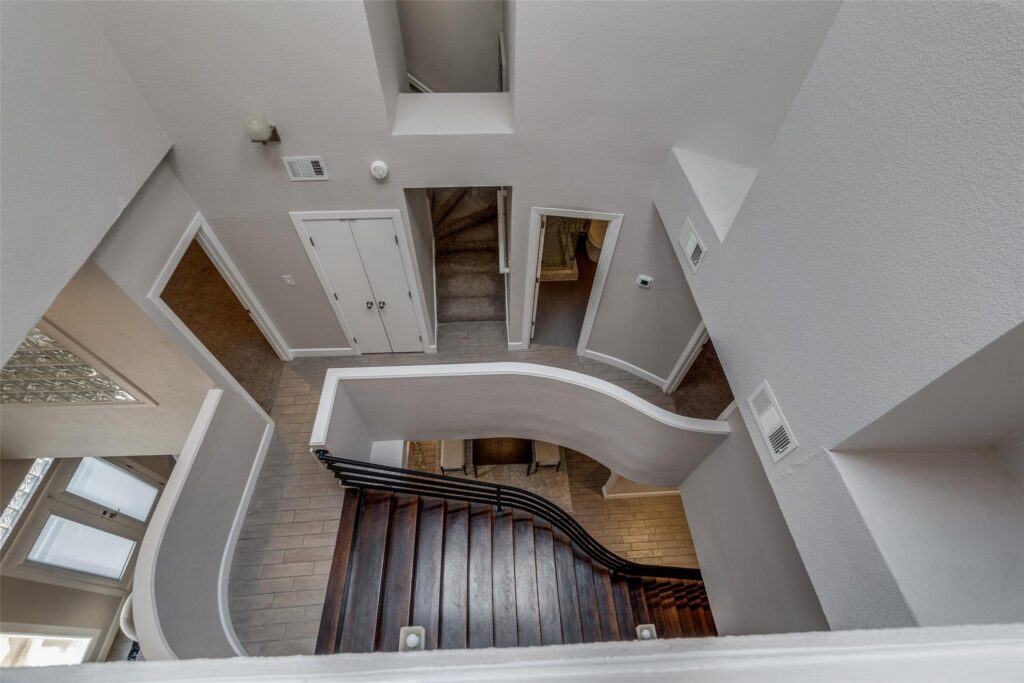
Behind the coordinated exterior, the residences are far from interchangeable. Public records and past listings show homes ranging from efficient one-level plans of about 1,262 square feet to multi-level residences exceeding 2,000 square feet. Two-bedroom layouts of roughly 1,360 to 1,396 square feet appear frequently, while some larger homes rise three stories and include balconies on multiple levels.
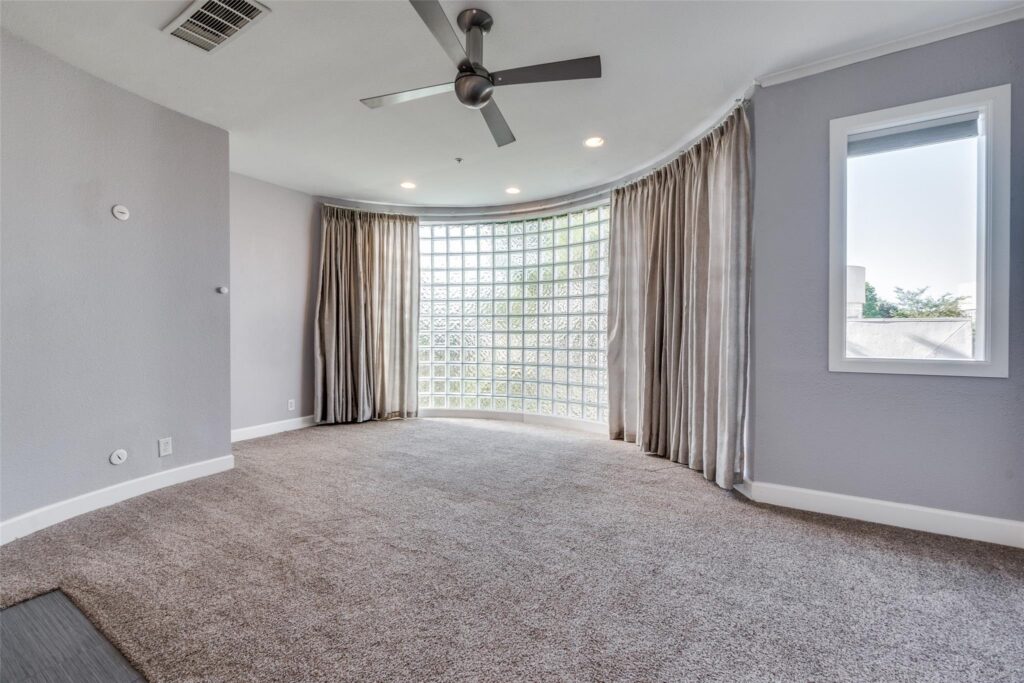
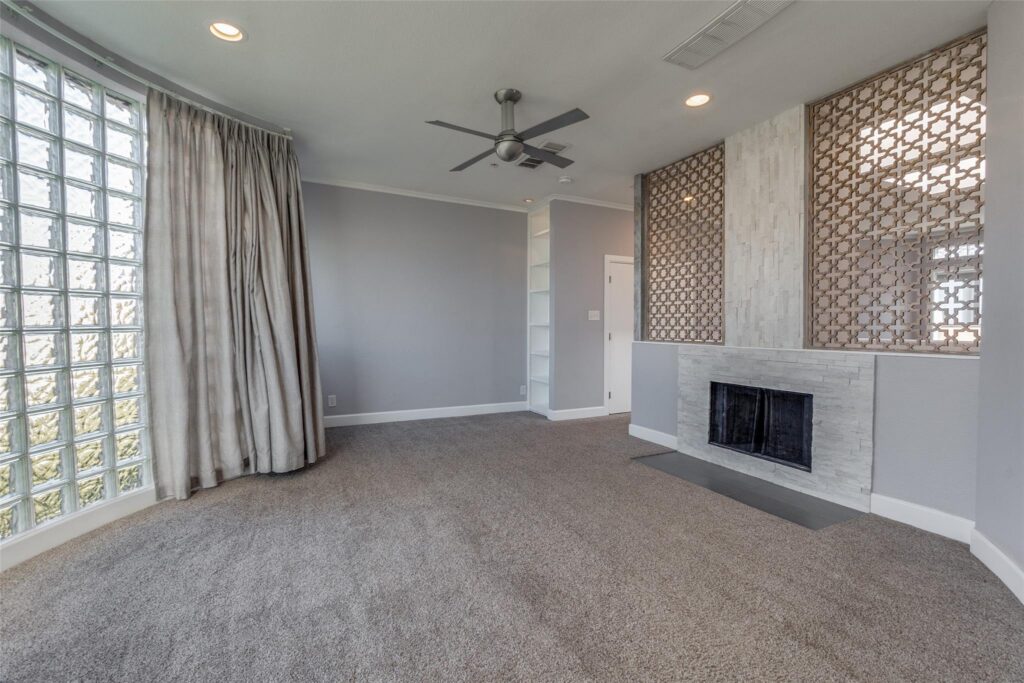
The details become even more theatrical inside. Past listings describe soaring ceilings, curved or custom staircases, skylights, wood-burning fireplaces, wet bars, gallery walls and primary suites with private balconies. One especially distinctive three-level residence has been marketed with hand-carved wood panels created by an artisan from Yemen. Individual renovations vary, naturally, but the architecture gives owners something increasingly rare: a memorable framework rather than a generic box.
Even the everyday amenities understand the assignment. The community has been marketed with a courtyard pool, fitness room and sauna, along with gated garage parking. Association inclusions reported in recent listings have commonly covered shared facilities, grounds, exterior structure, water, sewer and trash, though buyers should always verify current dues, coverage, reserves and rules directly from the latest association documents.
The address may be the greatest amenity
Avondale Gardens sits in the seam where several of Dallas’s best-known districts begin to overlap. Oak Lawn supplies the restaurants, independent businesses and civic history. Turtle Creek adds parkland and a more formal residential rhythm. Highland Park begins just to the north, while Uptown and the Katy Trail are close enough to shape daily routines. Lemmon Avenue and Whole Foods handle the errands, but the leafy residential setting keeps the address from feeling commercial.
That location carries a deeper Dallas story. The City of Dallas traces Oak Lawn’s beginnings to the nineteenth century, when its oaks, cedars and natural springs drew early settlement beyond downtown. By the twentieth century, the neighborhood had become one of the city’s most varied urban districts and later the historic heart of Dallas’s LGBTQ community. Avondale Gardens belongs to that tradition of reinvention: expressive, independent and comfortable being unlike the building next door.
Why it still stands out
New construction can imitate luxury, but it cannot manufacture a point of view. Avondale Gardens has one. Its proportions are bold, its interiors invite personalization and its architecture captures a brief Dallas moment when condominium living could be dense, playful and unmistakably individual.
For the right buyer, that difference is the entire appeal. This is a community for someone who wants Oak Lawn convenience without high-rise formality, a pool without a sprawling suburban footprint, and a home that friends can identify before they ever see the unit number. In a city full of handsome condominiums, 4040 Avondale remains the one that looks ready for cocktails by the water.
Sources and further reading: City of Dallas Office of Historic Preservation, “A Short History of Dallas’ Oak Lawn / Cedar Springs Neighborhood”; The Oak Lawn Plan; D Magazine, “Condo Fever”; and current and historical NTREIS-derived property records. Property dimensions, amenities, association charges and availability can change and should be independently verified.