Klyde Warren Park changed the value of an overlooked piece of Dallas by treating a freeway as buildable civic space. Its next chapter is now moving from vision toward construction.
In June 2026, the Texas Transportation Commission awarded the construction contract for the park’s 1.7-acre expansion to Archer Western, the firm that built the original deck structure. The project will extend the park west toward Field Street, covering the final recessed section of Woodall Rodgers Freeway and expanding the park from 5.4 acres to 7.1.
See the park foundation’s project announcement.
A new lawn, an overlook and an event pavilion
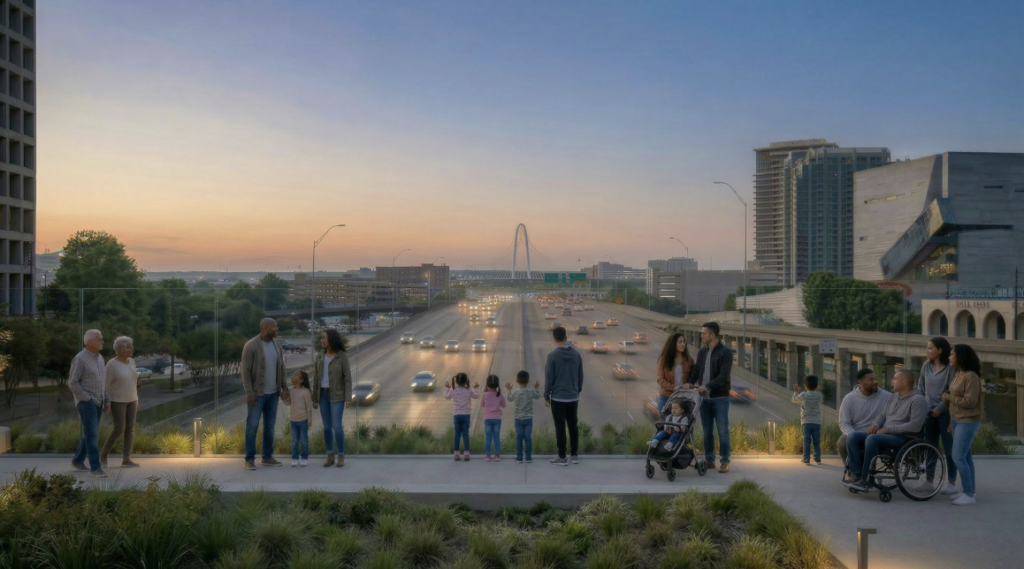
The expansion’s centerpiece will be the Jacobs Lawn, a 37,000-square-foot green space designed for markets, festivals, performances and civic gatherings. Plans call for the lawn to become an outdoor ice-skating rink during winter.
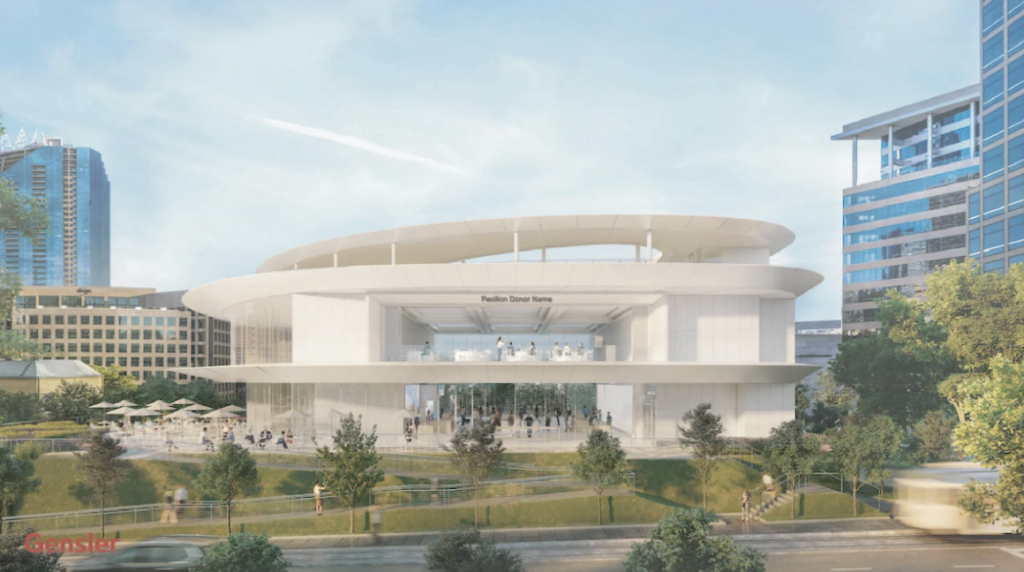
An adjacent overlook will give visitors a view of traffic disappearing beneath the deck, making the park’s unusual engineering part of the experience. A two-level glass-and-steel pavilion planned between St. Paul and Akard streets will add approximately 24,000 square feet of climate-controlled event and reception space, plus an 8,000-square-foot rooftop terrace.
Why a park belongs in a real-estate conversation
Public space is not decoration added after development. It is infrastructure that influences where people walk, where companies lease offices, where restaurants open and how long visitors stay.
The Klyde Warren Park Foundation estimates that the original park has contributed to billions of dollars in surrounding property-value growth and significant incremental tax revenue. Those figures come from the project’s own organization and should be understood as estimates, not as proof that every dollar of nearby appreciation was caused by the park alone.
Still, the physical change is undeniable. The deck connected Uptown and the Arts District across a roadway that once functioned as a barrier. New office towers, hotels, residences and restaurants now market proximity to the park as a central amenity.
The community value is more than financial
The most important real-estate feature may be the one no building owner controls: a shared front yard. Klyde Warren welcomes office workers, downtown residents, families, tourists and people arriving by trolley or on foot. Free programming and open lawn space let people participate in the urban core without buying admission or reserving a table.
The expansion offers more capacity for that civic role, but its success will depend on details beyond construction: shade, comfortable seating, maintenance, accessible pathways, public programming and the balance between ticketed private events and everyday public use.
What to watch during construction
- Traffic and pedestrian changes around Woodall Rodgers, Field, Akard and St. Paul
- The final construction and opening schedule
- Fundraising for programming and amenities
- Retail and restaurant activity around the expanded western edge
- How frequently the new pavilion and lawn remain freely accessible
Dallas is often criticized for giving too much land to cars and too little to people. Klyde Warren Park’s expansion turns that criticism into a practical design problem: how to reclaim more space over a freeway and make it useful, beautiful and shared.