A tiny litter alone under a porch can trigger an immediate rescue instinct. In many cases, however, the safest person to care for those kittens is already nearby: their mother.
Kitten season brings vulnerable young cats into Dallas yards, alleys, courtyards and construction sites. Finding them can feel like an emergency, particularly when no adult cat is visible. The first decision matters, and the most loving response is not always the fastest one.
First, determine whether this is truly a rescue
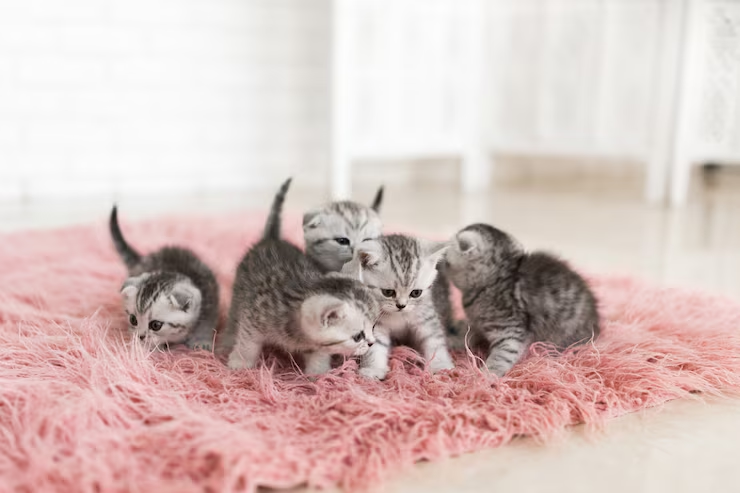
Mother cats regularly leave their litters while they search for food or wait for a quiet opportunity to return. A watchful person standing close to the nest may unintentionally keep a cautious mother away. If the kittens appear warm, clean, quiet and safely tucked together, step back and observe from a distance.
Dallas Animal Services advises leaving healthy kittens where they are unless they are injured, covered in fleas or their mother has not returned after eight or more hours. A light ring of flour placed around the area can reveal paw prints without requiring you to hover near the nest. Check periodically from far enough away that the mother feels safe approaching.
Know the signs that waiting is no longer safe
Intervention is warranted when kittens are visibly injured, cold, weak, dirty, continuously crying or exposed to immediate danger. Traffic, flooding, severe weather, loose dogs and active construction can turn an otherwise stable nest into a crisis.
If the danger is immediate, move the kittens only as far as necessary to create safety so their mother can still locate them. Contrary to a persistent myth, a mother cat will not automatically reject her kittens because a person touched them. Unnecessary relocation can still make reunion harder, so preserve the original area whenever possible.
Age changes everything
Very young kittens with closed or newly opened eyes, flattened ears and unsteady movement depend on their mother for warmth, nutrition and basic care. As they grow, they become steadier, more playful and increasingly able to eat on their own. A veterinarian, shelter or experienced kitten foster can help estimate age from photographs and advise what the litter needs next.
Do not give cow’s milk, improvise bottle-feeding or apply flea medication without professional direction. Neonatal kittens are fragile, and feeding a chilled kitten can be dangerous. Warmth comes first, followed by guidance from someone trained in kitten care.
Support the family without separating it
If the mother returns and the location is safe, the best help may be simple: fresh water, food for the mother and a dry shelter nearby. Keep children and household pets away so the family can remain calm. Avoid repeatedly handling the kittens simply because they are irresistible.
The next step is to connect with a community-cat or rescue program about spaying the mother when it is appropriate and arranging veterinary care, fostering or adoption for the kittens when they are old enough. Helping one family can prevent the next litter while protecting the mother cat already living in the neighborhood.
Who to call in Dallas
For confirmed orphaned, critically sick or injured kittens found within the City of Dallas, call 311. Dallas Animal Services can coordinate assistance through its foster program and rescue partners. The SPCA of Texas also maintains a kitten-resource page and directs found animals to the appropriate local agency based on where they were discovered.
Location matters. Pets found inside Dallas city limits are handled differently from animals found in unincorporated Dallas County or another municipality. When contacting an organization, provide the exact location, the number of kittens, their apparent condition, how long you have observed them and whether the mother has returned.
The most important rule: do not kit-nap
A cardboard box full of tiny kittens can look like an obvious rescue. Sometimes removing them is the action that places them at greater risk. Pause, watch, assess and ask for help before changing the situation.
Compassion is not measured by how quickly we scoop an animal up. It is measured by whether we give that animal the best chance to survive, even when the right decision is to step back and let its mother come home.
Dallas resources: Dallas Animal Services Found Kittens and SPCA of Texas Kitten Resources. This article provides general guidance and is not a substitute for veterinary care.