I made beef stew this past week, and it turned into the sort of project that makes staying home feel like a very good decision. There was bacon in the pot, red wine in the sauce and a generous amount of vegetables. Subtle? Not especially. Dinner does not always need to whisper.
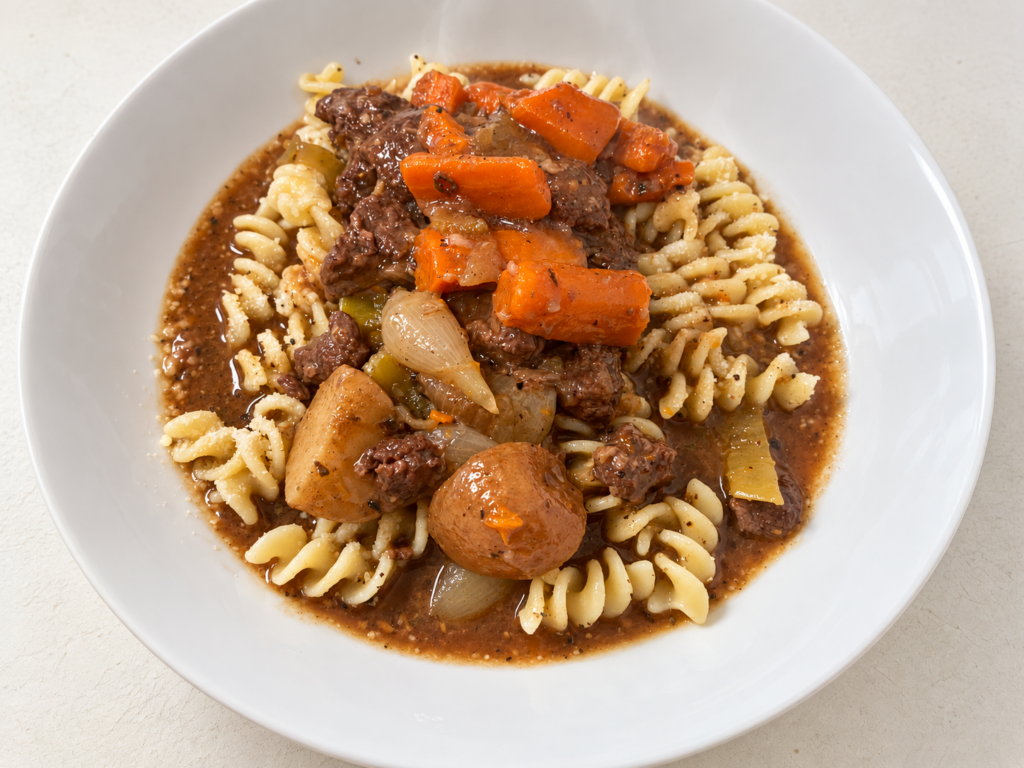
The important change was the order of things: I cooked the carrots before the onions, then added celery with the onions. The finished bowl went over spiral pasta, with potatoes and pearl onions very much part of the picture. This is a home-kitchen take on beef bourguignon, not an argument with anyone’s French grandmother.
The recipe below is an original Dallas Registry working version developed around Kevin’s photographs and confirmed cooking notes. The quantities and timings are proposed kitchen guidance, not a record of his exact measurements, and this written version has not been independently kitchen-tested.
Beef Bourguignon, My Way
Serves: about 6
Allow: roughly 3½ to 4 hours, including preparation. Tenderness, not the clock alone, determines when the beef is ready.
Ingredients
- 3 pounds beef chuck, trimmed and cut into roughly 1½-inch pieces
- 6 ounces thick-cut bacon, diced
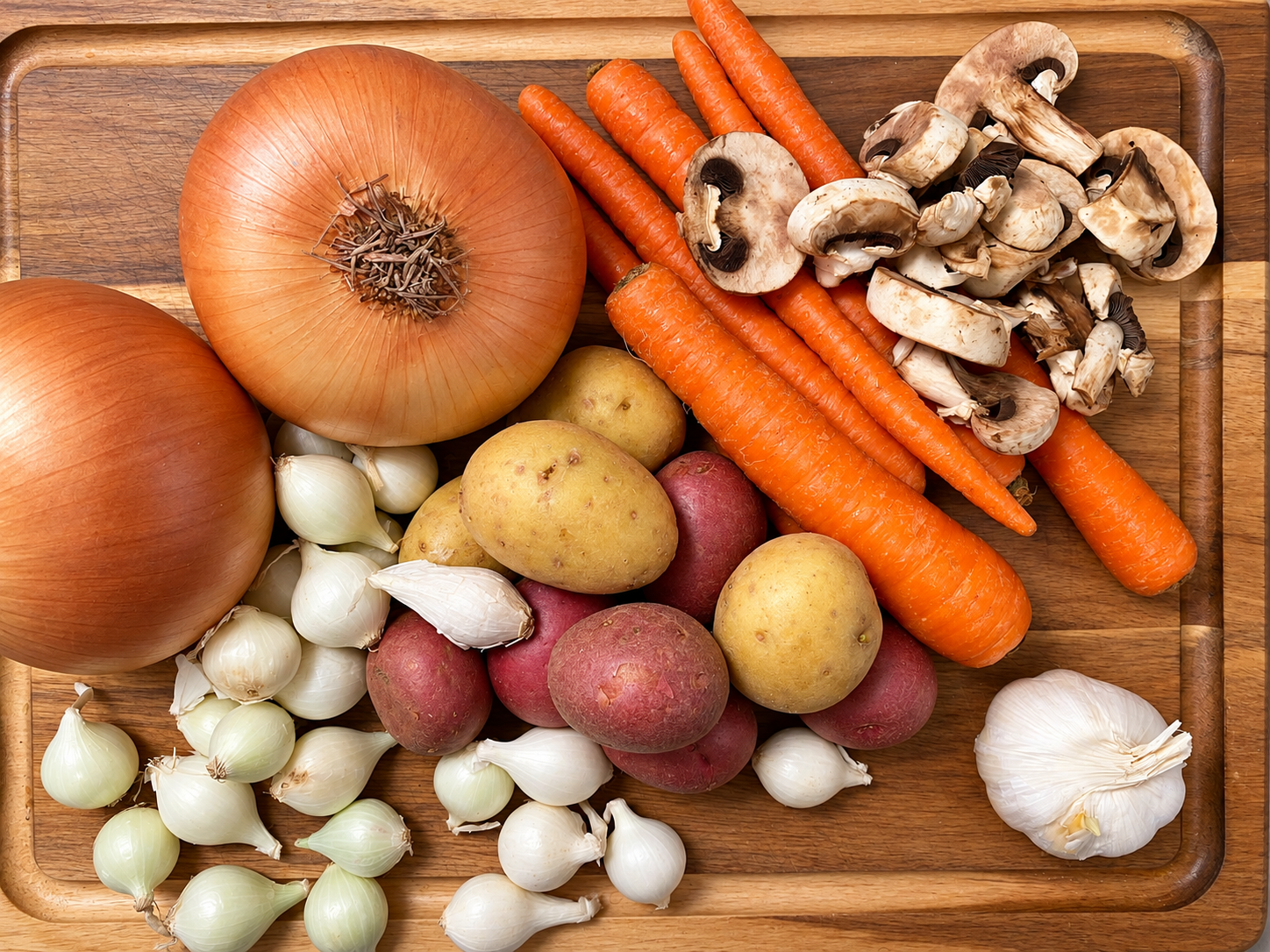
- 1 pound carrots, peeled and cut into chunky lengths
- 2 medium yellow onions, chopped
- 3 celery stalks, sliced
- 4 garlic cloves, minced
- 12 ounces mushrooms, sliced
- 2 tablespoons all-purpose flour
- 2½ cups dry red wine
- 2½ cups low-sodium beef stock, plus more if needed
- 4 thyme sprigs and 2 bay leaves
- 1 pound small potatoes, halved if large
- 8 ounces peeled pearl or small cipollini onions
- 1 to 2 tablespoons olive oil, as needed
- Kosher salt and freshly ground black pepper, to taste
- Cooked spiral pasta, for serving
1. Begin with the bacon
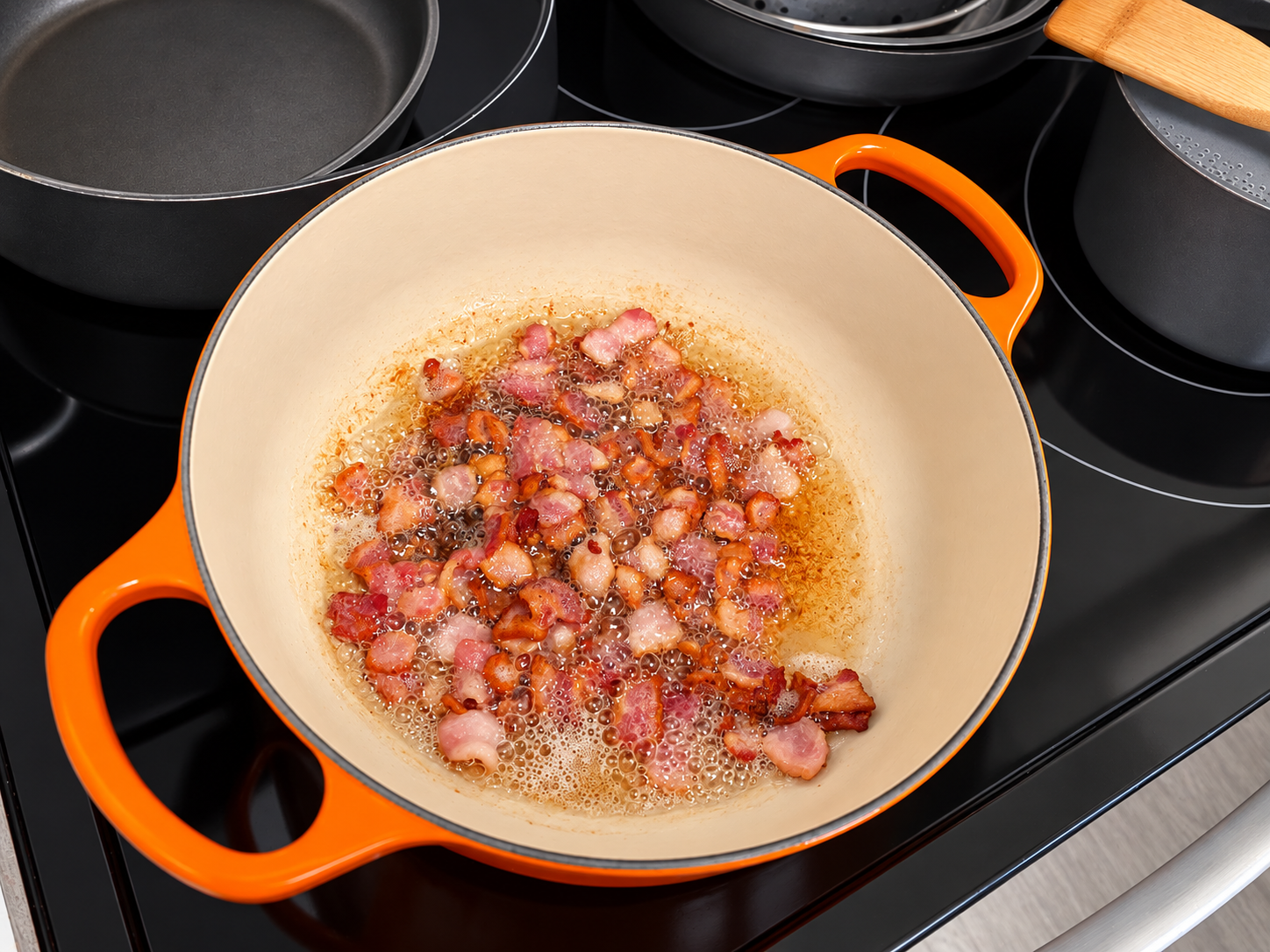
Heat the oven to 325°F. In a large oven-safe Dutch oven, cook the bacon over medium heat until it has rendered its fat and begun to crisp. Transfer it to a bowl with a slotted spoon. Leave about 2 tablespoons of fat in the pot, reserving or discarding the excess.
2. Brown the beef in batches
Pat the beef dry and season it with salt and pepper. Raise the heat to medium-high and brown it in small batches, adding a little oil if the pot becomes dry. Give each batch room rather than piling all the meat in at once. Transfer the browned pieces to a bowl. The photographs show the transition from the start of cooking to the beef taking on color.
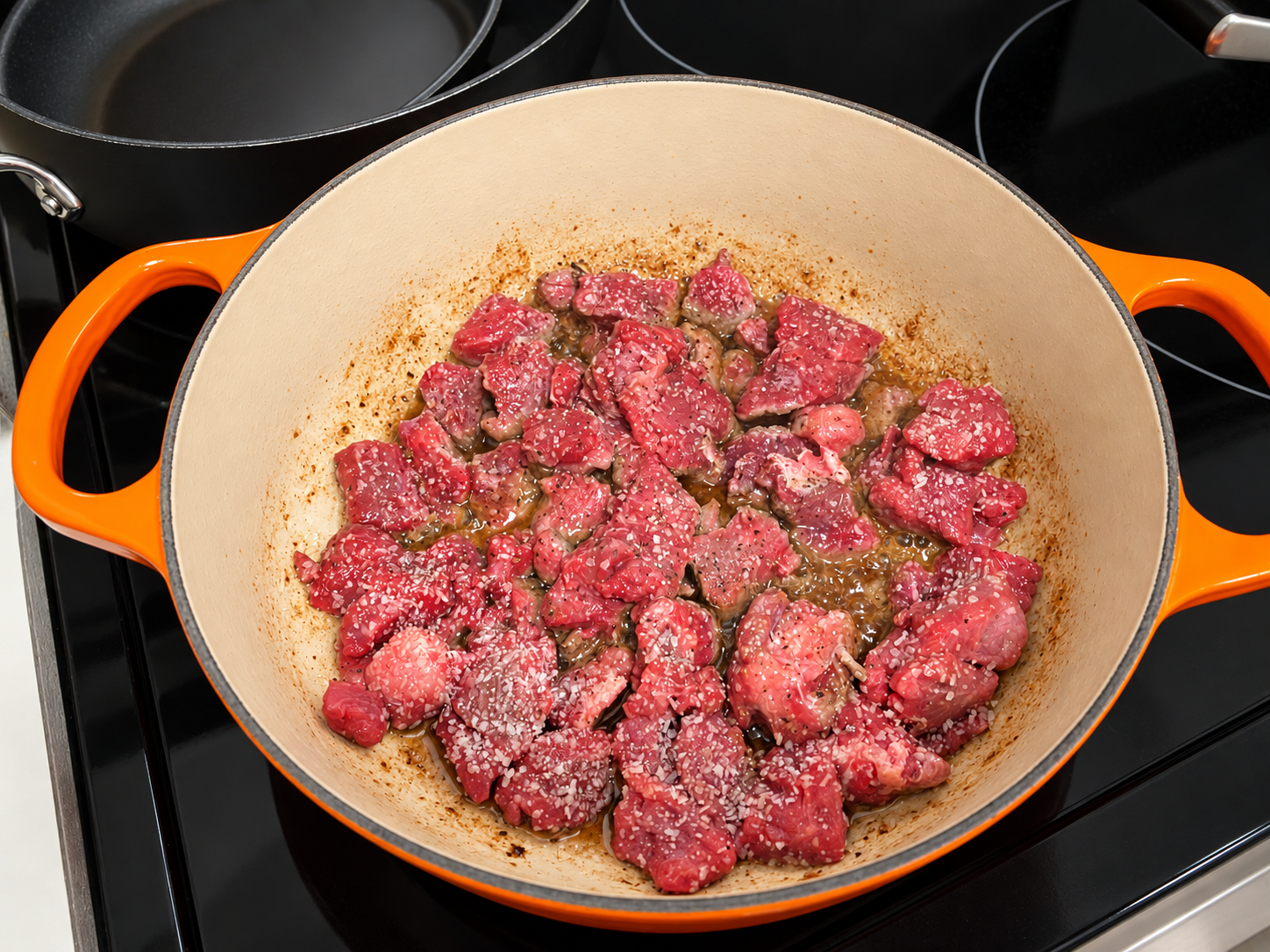
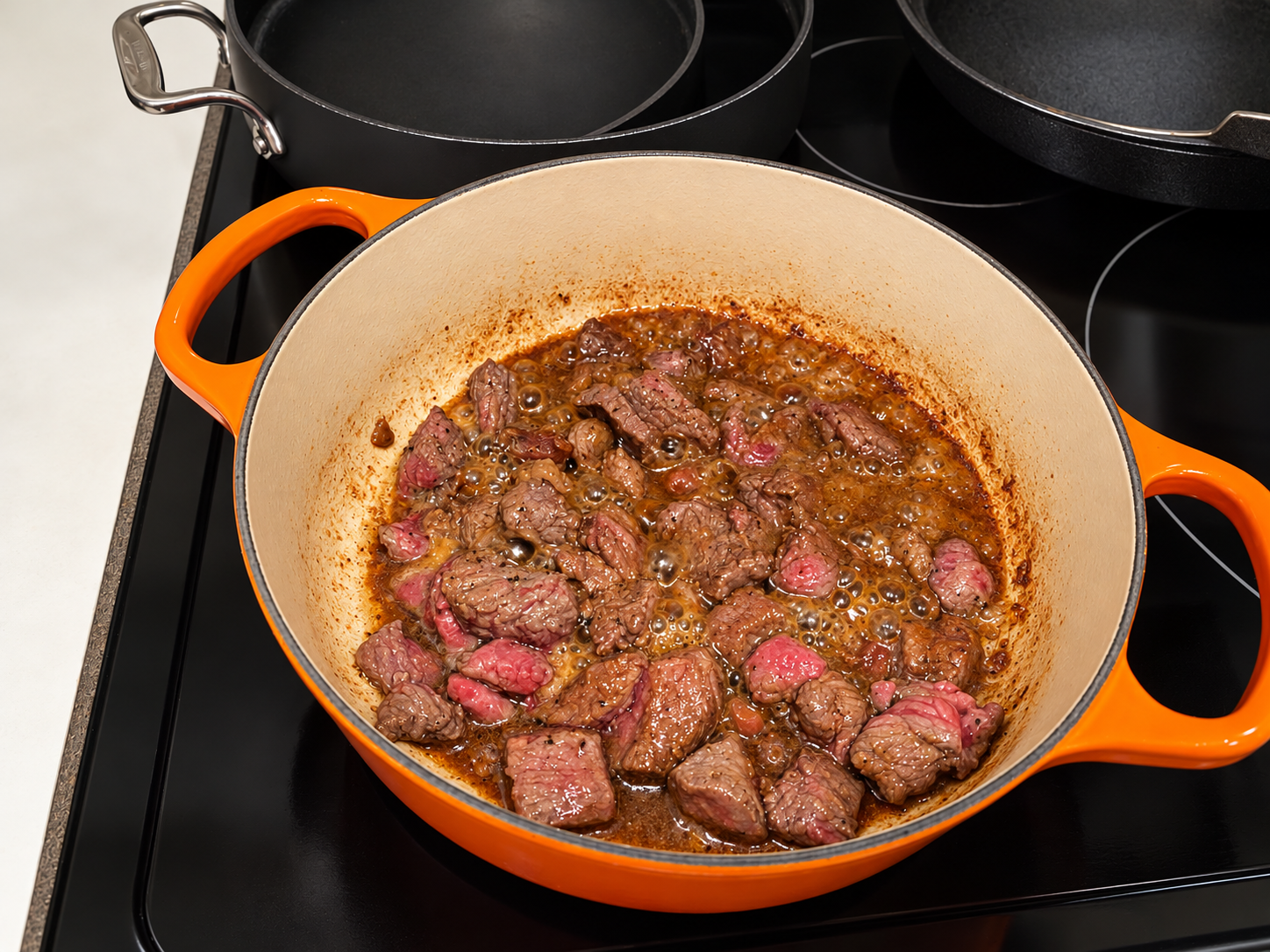
3. Carrots first, then onions and celery
Reduce the heat to medium. Add the carrots to the Dutch oven and cook, turning occasionally, until their edges begin to color, about 5 to 7 minutes. Transfer them to a separate bowl; they will finish cooking later.
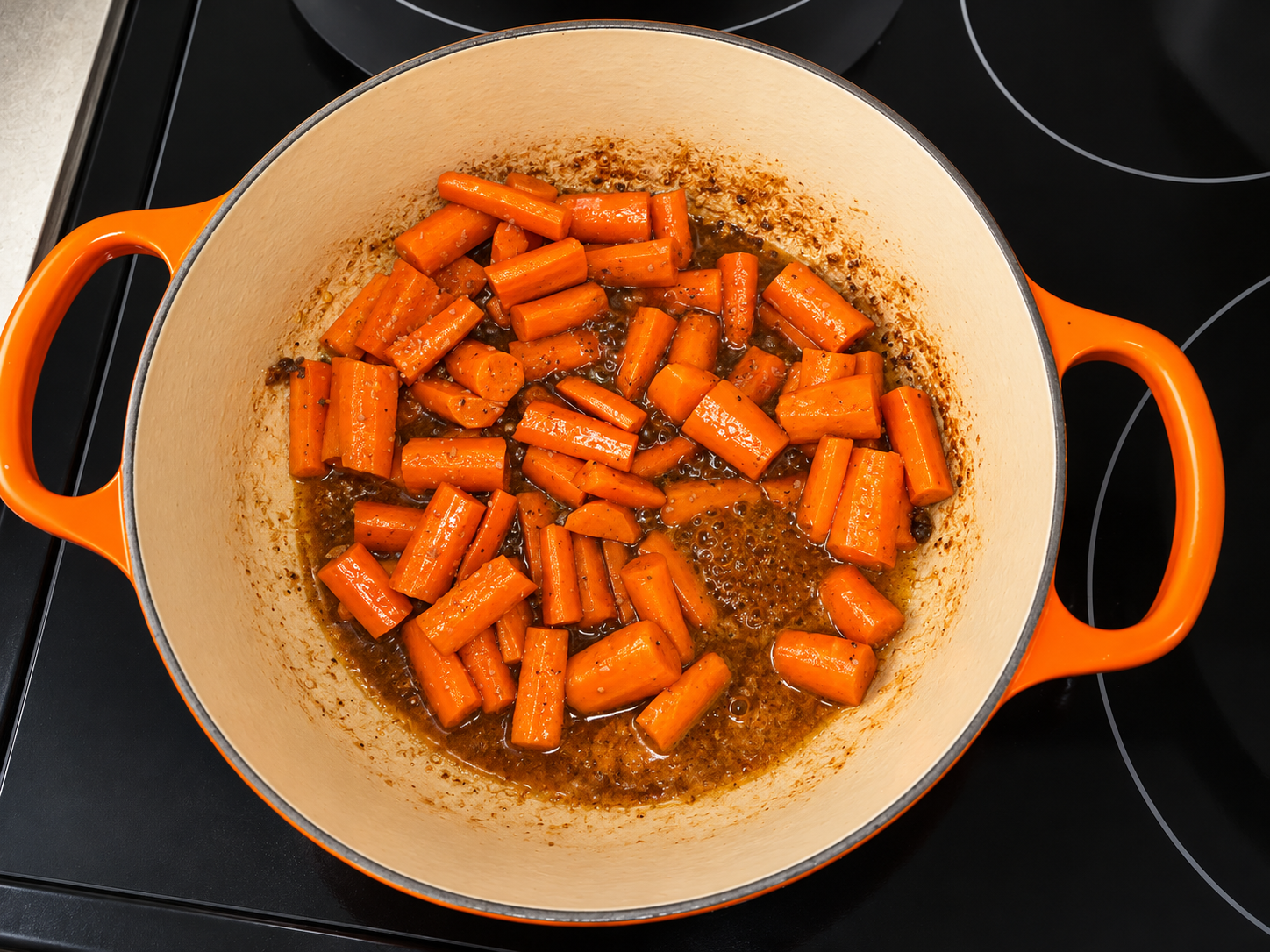
Add the chopped yellow onions and celery to the same pot, with a little oil if necessary. Cook until softened, about 6 to 8 minutes. Stir in the garlic for the final minute. This is Kevin’s confirmed variation: the celery goes in with the onions, not with the earlier carrot batch.
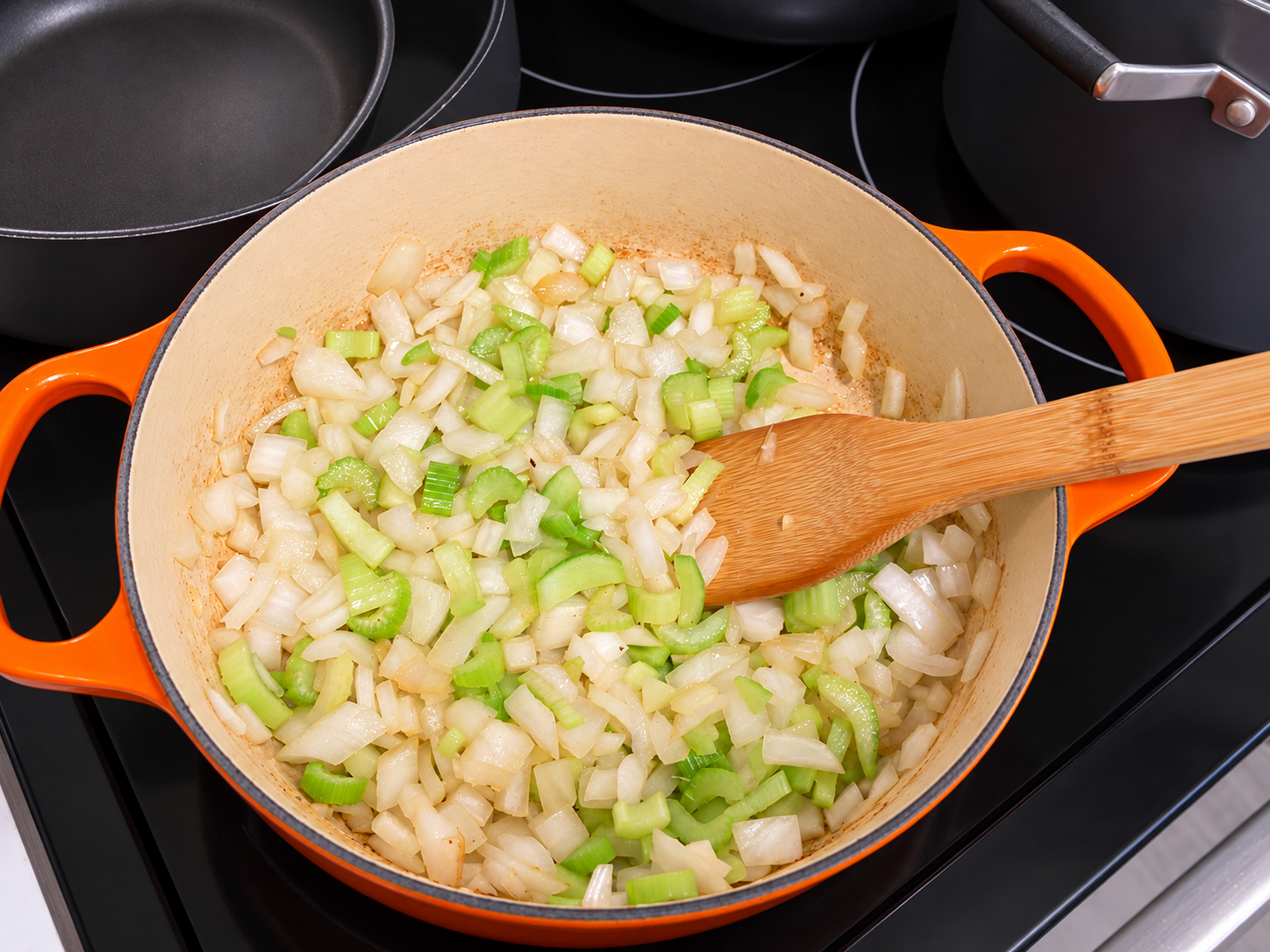
4. Build the red-wine braising liquid
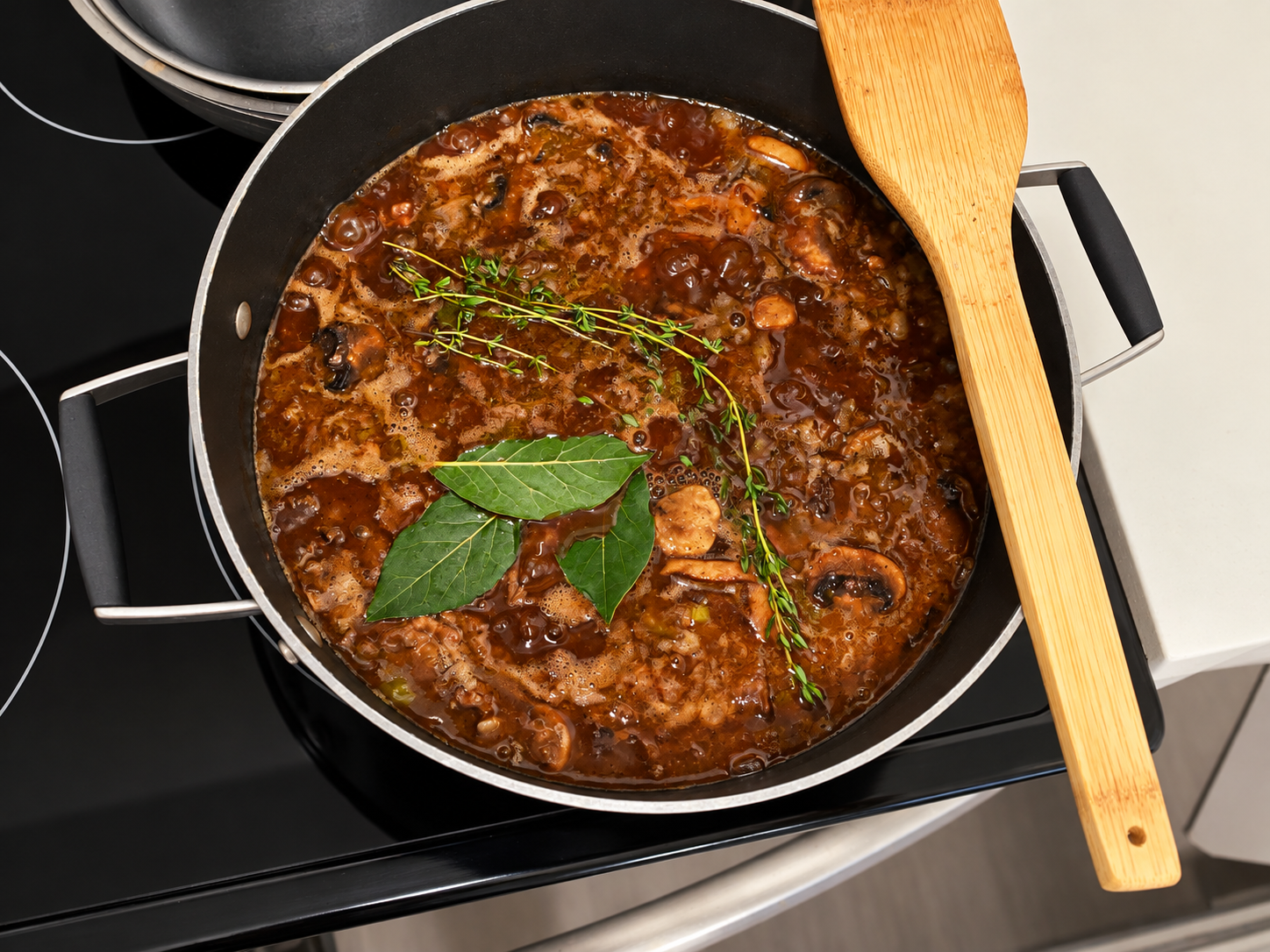
In a wide skillet, heat 1 tablespoon of oil and cook the mushrooms until they release their moisture and begin to brown. Sprinkle in the flour and stir for about a minute. Gradually add the wine, stirring and scraping up the browned bits. Add the stock, thyme and bay leaves. Bring to a gentle simmer and stir until the liquid is smooth.
5. Let the oven take over
Return the beef, bacon and any collected juices to the Dutch oven with the onion-celery mixture. Pour over the mushroom-wine liquid. It should reach most of the way up the meat; add a little stock if necessary. Bring to a gentle simmer, cover and transfer to the oven.
After about 1½ to 2 hours, check the beef. When it is beginning to soften but is not yet fully tender, add the reserved carrots, potatoes and peeled pearl onions. Cover and continue cooking until the meat yields easily to a fork and the vegetables are tender, usually another 45 to 60 minutes. If the beef needs longer, continue gently and check the liquid level.
6. Finish generously
Remove the bay leaves and thyme stems. Taste before adding more salt. If the sauce is thinner than you like, simmer gently on the stovetop, uncovered, until it coats a spoon. If it is too thick, loosen it with stock.
Spoon the bourguignon over freshly cooked spiral pasta, as shown in Kevin’s finished bowl. With potatoes already in the stew, pasta is a generous extra rather than a requirement. Nobody at this table appears to be afraid of a carbohydrate.
A Few Notes
Leftovers: Divide into shallow containers and refrigerate promptly, within two hours of cooking, or within one hour above 90°F. Reheat leftovers to 165°F. Keep pasta separate when practical. See USDA’s leftover guidance.
Process photographs supplied by Kevin Day and editorially re-rendered with AI to remove haze and kitchen splatters while preserving the photographed cooking stages. Hero image supplied by Kevin Day.