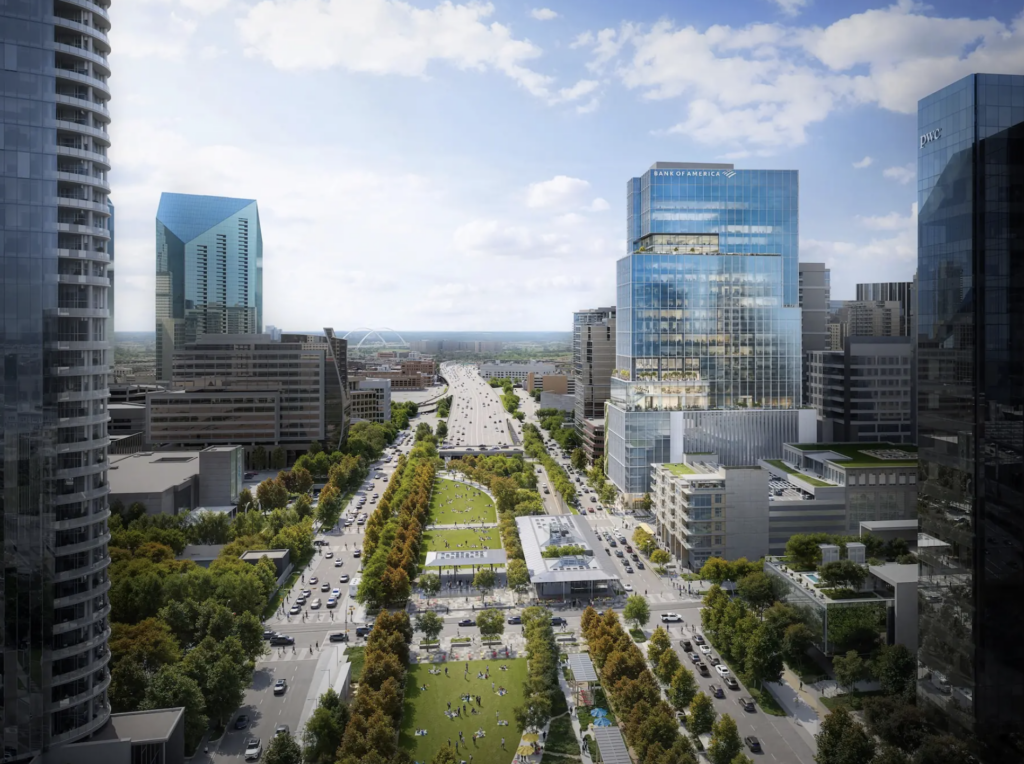
The glass rising above Klyde Warren Park is more than a new addition to the skyline. Bank of America Tower at Parkside is a statement about where major employers and developers believe Dallas’s center of gravity is moving.
The 30-story, 500,000-square-foot office tower is under construction at North Harwood Street and Woodall Rodgers Freeway. Developer KDC says the building is scheduled for completion in the first half of 2027. Bank of America, the signature tenant, is expected to occupy more than 238,000 square feet.
Read the developer’s project overview.
A trophy tower built around location
Parkside’s strongest amenity is the city around it. Klyde Warren Park is immediately outside, the Arts District is across the freeway and Uptown’s restaurants, hotels and residential towers are within walking distance. The free M-Line trolley connects the area with DART light rail and other Uptown destinations.
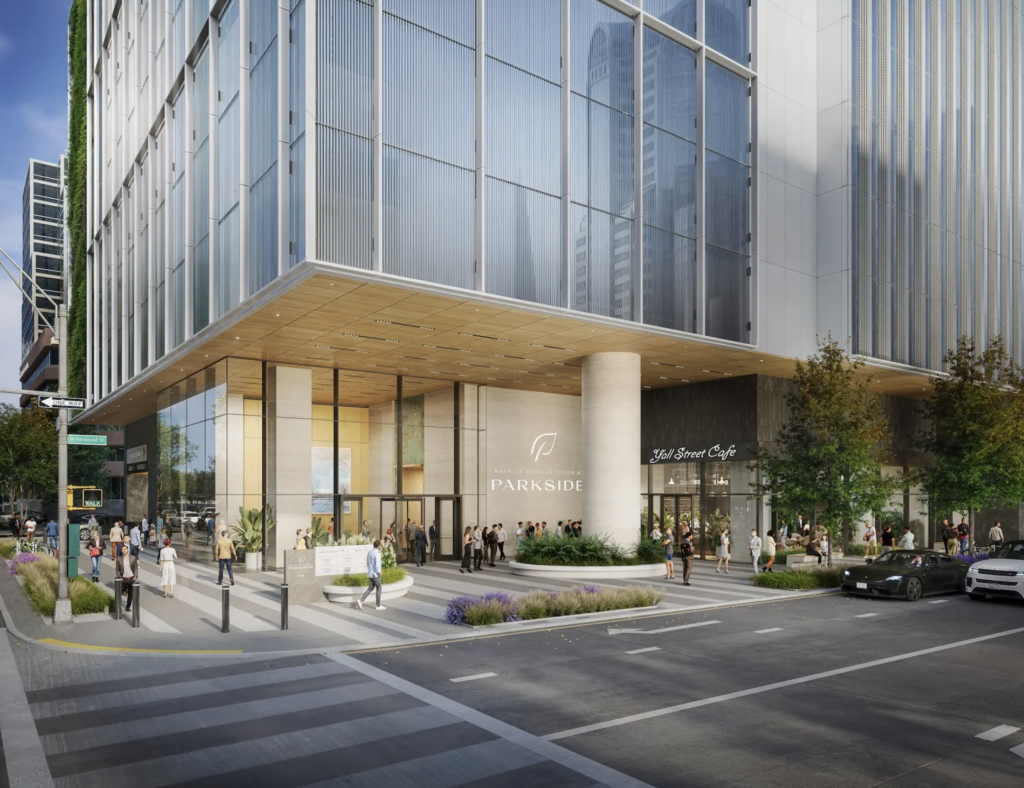
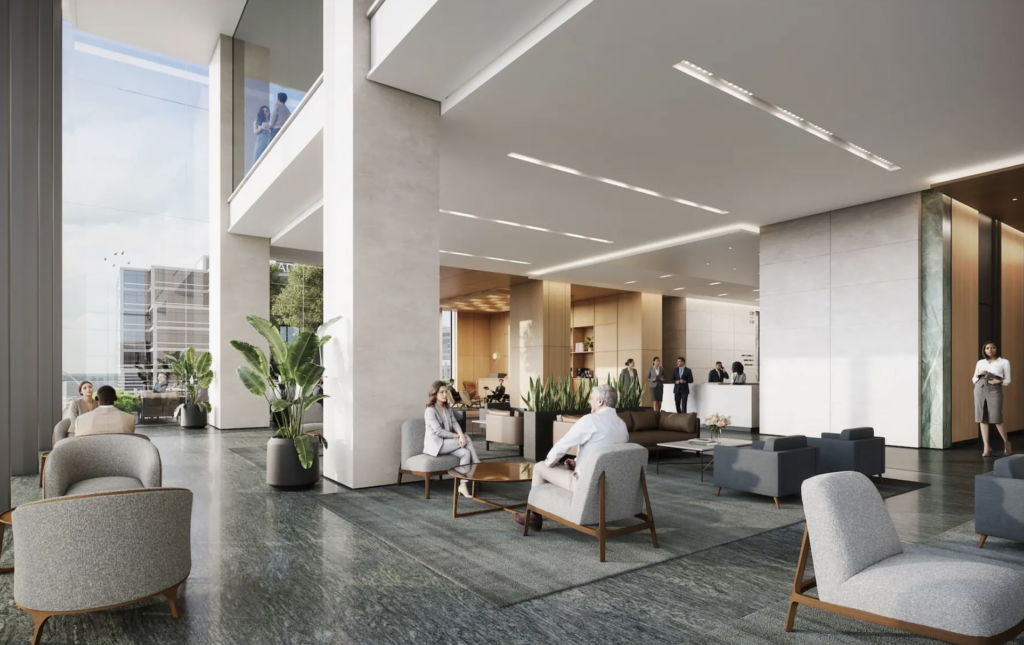
The project also includes approximately 8,000 square feet of ground-floor retail and a corner plaza. Planned tenant amenities include a sky lobby and lounge, outdoor terraces, conference and fitness facilities, and coffee and cocktail service.
Those details reflect the challenge facing new office construction. Employers are not simply leasing square footage; they are using the workplace to recruit people back from home offices and compete for talent. New buildings must offer an experience older towers were not designed to provide.
What it says about Uptown real estate
For years, Dallas’s traditional office identity was anchored by the downtown skyline. Parkside reinforces Uptown’s evolution into a corporate district of its own—one that sells walkability, hospitality and proximity to residential neighborhoods as much as highway access.
That can have several effects on nearby real estate. A large daytime workforce supports restaurants and service businesses. Ground-floor activity can improve the pedestrian experience. High-profile tenants can encourage additional investment and raise the profile of surrounding properties.
But a new trophy tower does not erase the broader uncertainty in office real estate. Companies continue to reconsider how much space they need, older buildings face costly upgrades and headline lease rates do not tell the whole story when concessions are involved. Parkside’s performance should not be treated as proof that every office asset in Dallas is recovering at the same pace.
What buyers, owners and investors should watch
- Retail leasing: The ground-floor tenants will help determine how much the project contributes at street level.
- Completion and move-in: Construction schedules can change; KDC currently points to the first half of 2027.
- Nearby leasing: Watch whether the tower draws tenants from downtown, from suburban campuses or from outside the region.
- Residential demand: More high-income employees in the area could support nearby apartments and condominiums, but interest rates, inventory and building-specific costs still matter.
- The older-building response: Renovations, conversions and repositioning may become more important as new towers raise expectations.
Parkside is already changing the view from Uptown and the Arts District. Its more important legacy may be the standard it sets for the next generation of Dallas office development: connected to the neighborhood, rich in amenities and designed to make being at work feel like being in the city.
Source: KDC. Building plans and schedules remain subject to change.